The versalab m3 grinder review verdict from the hi-fi crowd is unanimous: this is the espresso grinder that respects mechanical truth. If you have ever sat in front of a turntable adjusting VTA with a precision gauge, or set the bias on a Class A amplifier with a multimeter rather than trusting an auto-bias circuit, the Versalab M3 will feel like home. It rejects everything the modern grinder industry has embraced—stepless electronic alignment, motorized burr carriers, app-based calibration—and replaces them with shimmed bearings, hand-lapped flats, and a vertical conical burr geometry you align yourself with a dial indicator if you want to go that far.
Why hi-fi collectors reject electronic burr alignment
Walk into any audiophile listening room and you will see the same pattern: passive crossovers over DSP, mechanical tonearms over linear-tracking servos, vintage Class A amps over modern Class D. The objection is not nostalgia—it is signal path. Every active circuit between input and output is another opportunity for noise, drift, and failure modes you cannot diagnose without a service manual.
Electronic burr alignment in grinders follows the same logic that high-end audio rejected decades ago. A motorized leveling carriage may auto-correct to within a few microns on day one, but it adds servos, sensors, firmware, and a calibration table that drifts as bearings wear. When something goes wrong, you ship the unit back to the manufacturer. There is no equivalent of swapping a tube or rebiasing a transistor.
The Versalab M3 takes the opposite stance. Burr alignment is achieved through ground reference surfaces, shimmed to a tolerance you can verify with your own indicator. If alignment ever drifts, you reshim. If a burr chips, you replace it. The whole grinder is designed to be understood by its owner, the way a Linn LP12 or a Quad ESL-57 was designed to be understood and serviced for decades.
What makes the Versalab M3 mechanically special
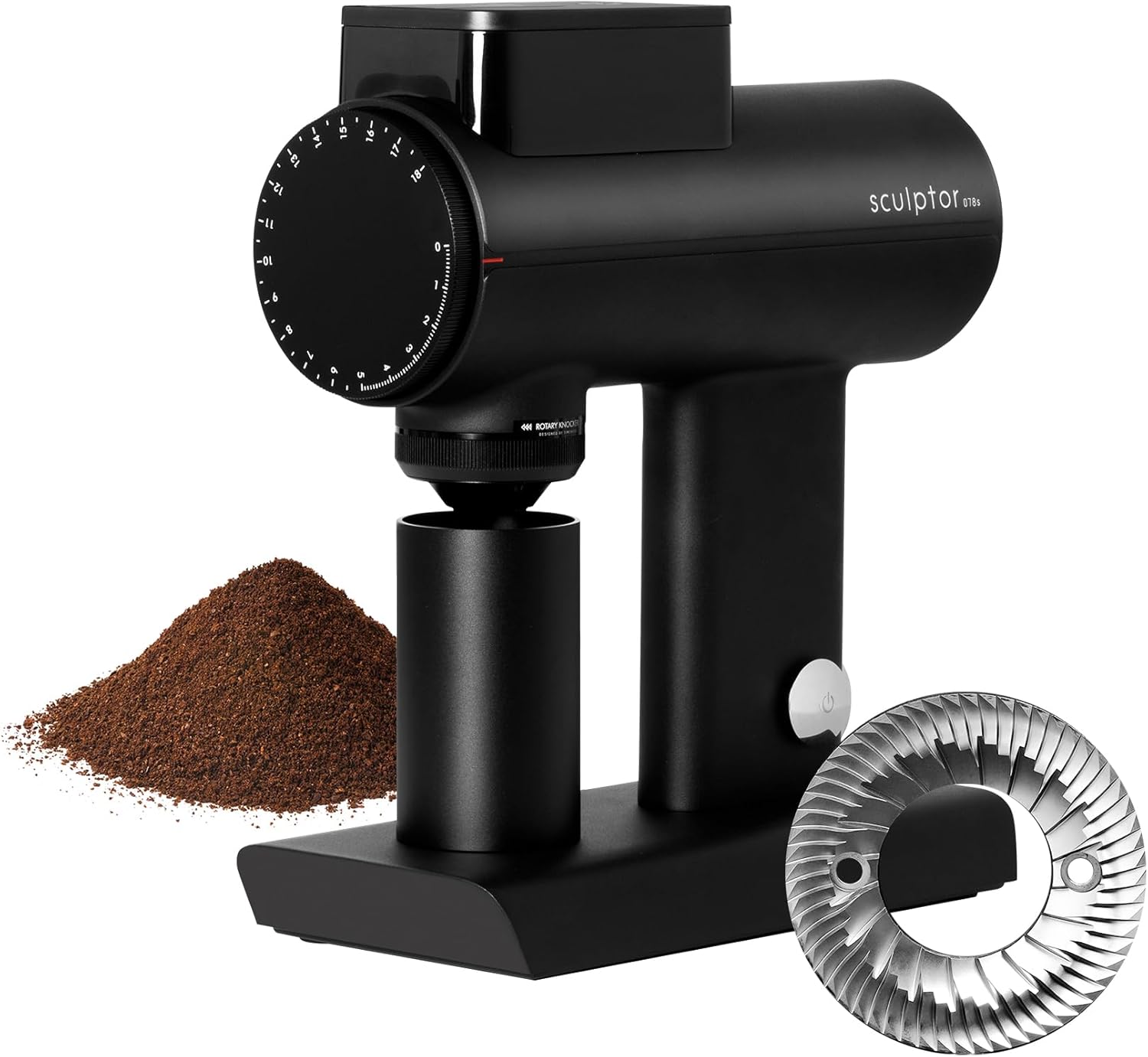
The M3 is built around a vertical conical burr arrangement with a heavy machined chassis—closer in mass and construction to a bench lathe than a kitchen appliance. The motor drives the burrs through a belt rather than a direct-coupled shaft, which isolates motor vibration from the cutting geometry. Audiophiles will recognize the parallel: belt-drive turntables decoupled their platters from motor noise for exactly this reason.
Three details matter most to the mechanical-purist crowd:
- Manual shim alignment: the upper burr carrier sits on a machined reference face. Alignment is set with brass shims, not a screw-and-spring assembly that loosens over thousands of doses.
- Vertical conical geometry: grounds fall by gravity through the chute rather than being augered out, which keeps the grind path short and retention low without needing a bellows or RDT spray.
- Brush-DC motor with mechanical speed control: there is no inverter board, no firmware, no thermal-overload chip. If it stops working, the failure is mechanical and visible.
How the M3 compares to electronically-aligned grinders
The current generation of high-end grinders—Lagom P64 with its alignment system, the Option-O Lagom Mini with tunable preload, the Niche Duo with dual-mode firmware—are excellent machines. But they all carry electronic dependencies. The Versalab M3 buyer is explicitly opting out of that path.
In daily use, the M3 produces a grind distribution that holds its own against any prosumer grinder at the price point, with the trade-off that you, the owner, are responsible for keeping it aligned. For a hi-fi collector accustomed to azimuth adjustments and biwire terminations, this is a feature, not a chore.
Espresso machines worth pairing with the M3
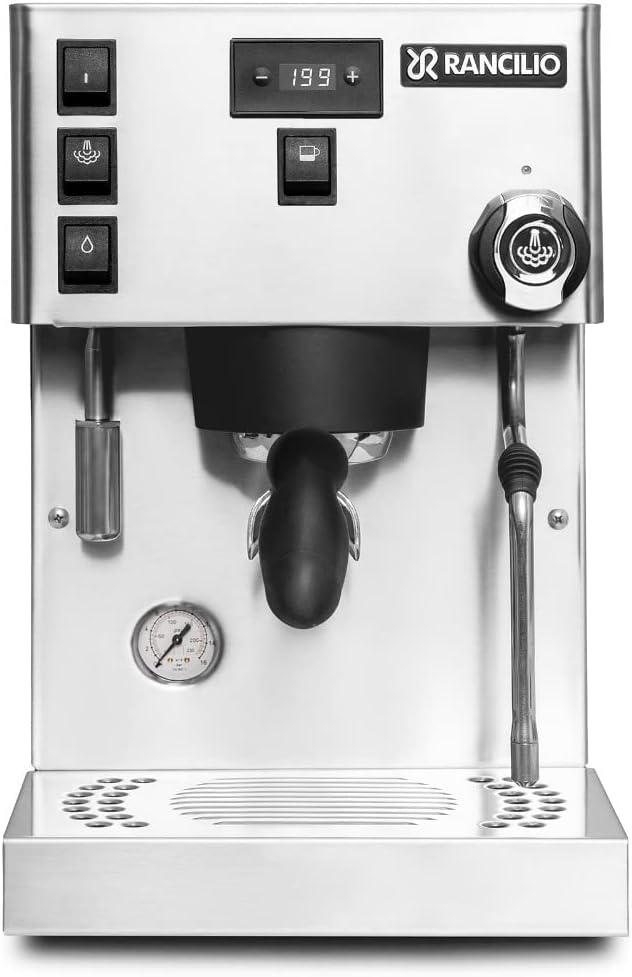
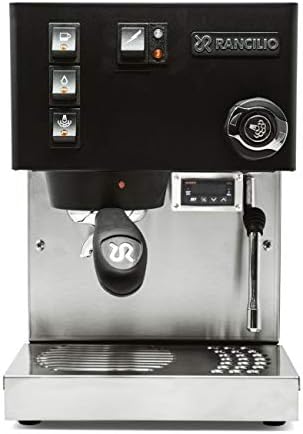
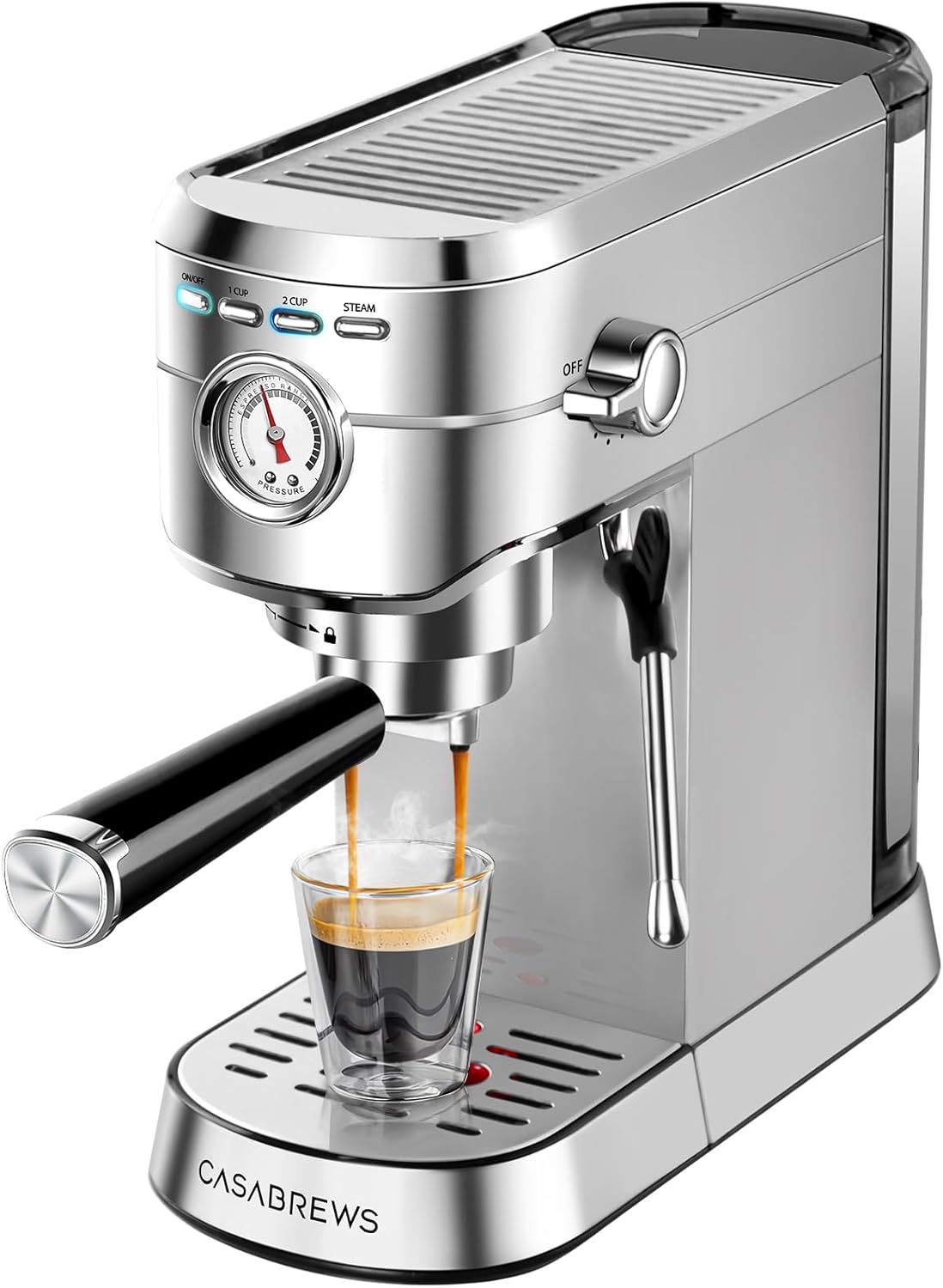
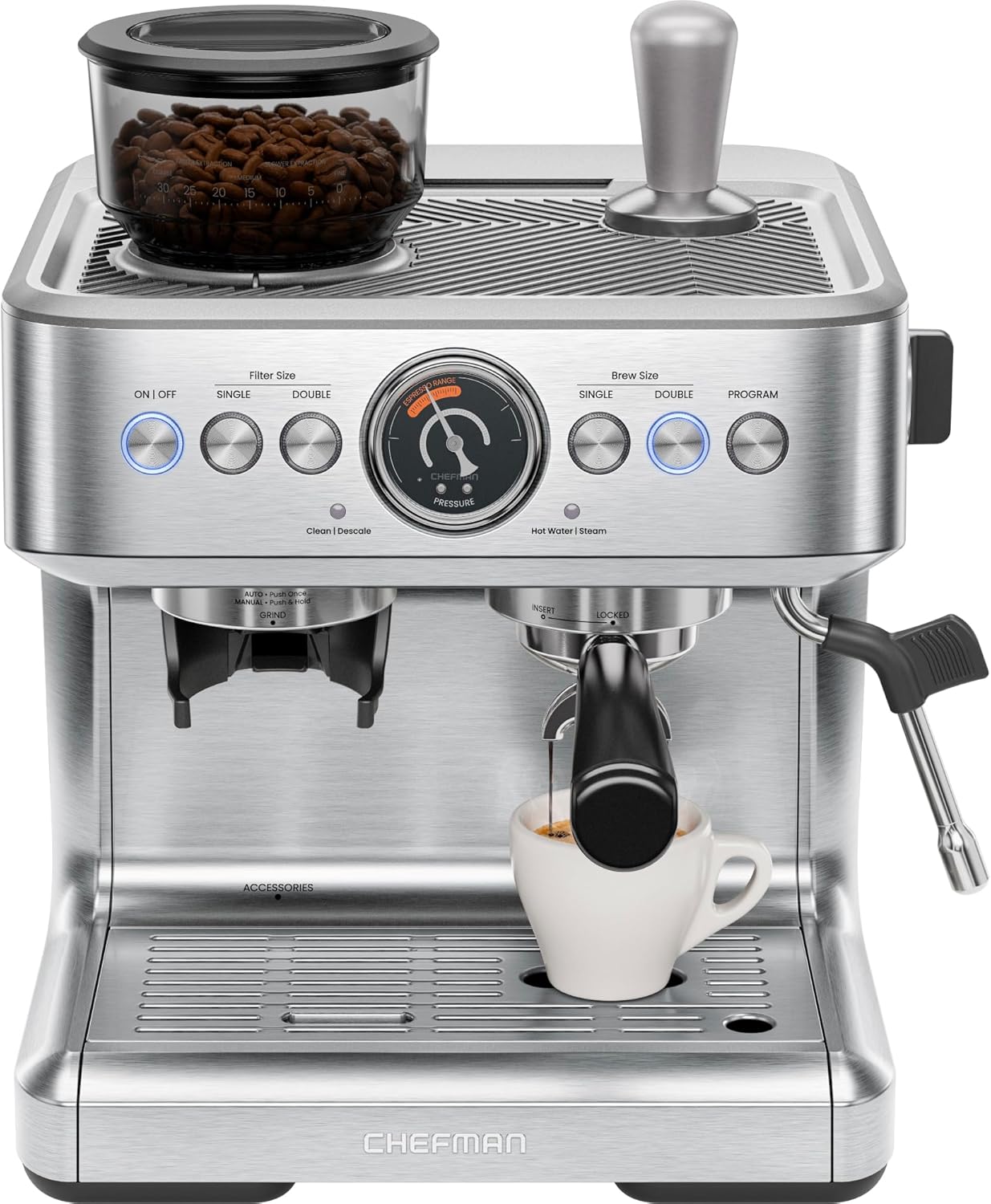
The Versalab M3 is grinder-only, so most owners pair it with a dedicated espresso machine that matches its mechanical ethos. The shortlist below covers the three pairings that come up most often in hi-fi-adjacent coffee forums—ranging from a prosumer single-boiler workhorse to fully automatic machines for households where guests do not want to learn distribution and tamping.
| Machine | Best for | Pairing notes with the M3 |
|---|---|---|
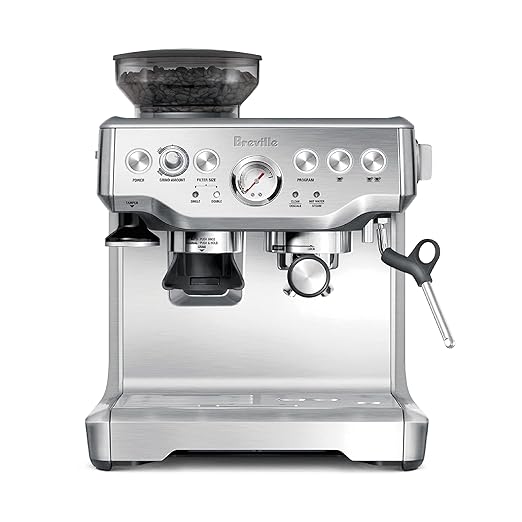
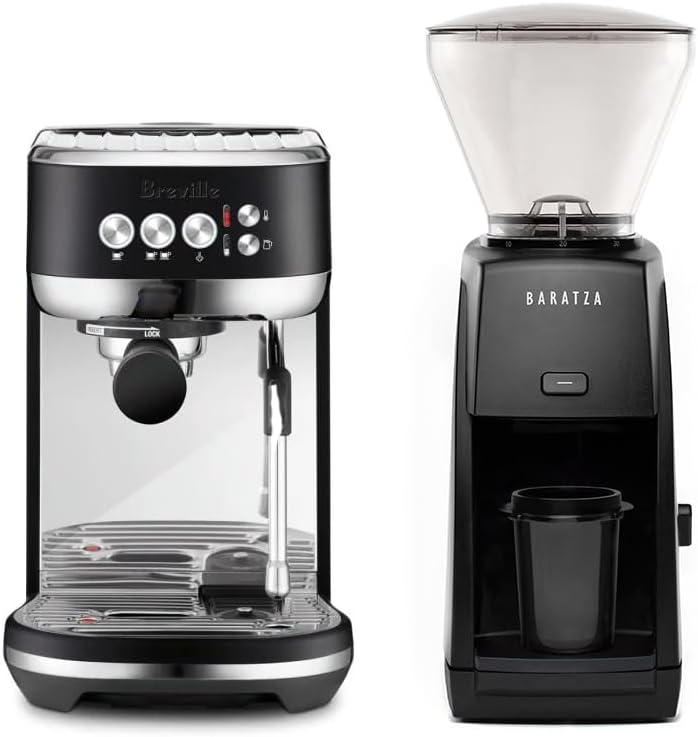
| Breville Barista Express BES870XL | The serious M3 user who wants one capable second machine | PID thermocoil and 54mm portafilter accept M3 grounds well; bypass the onboard grinder entirely. |
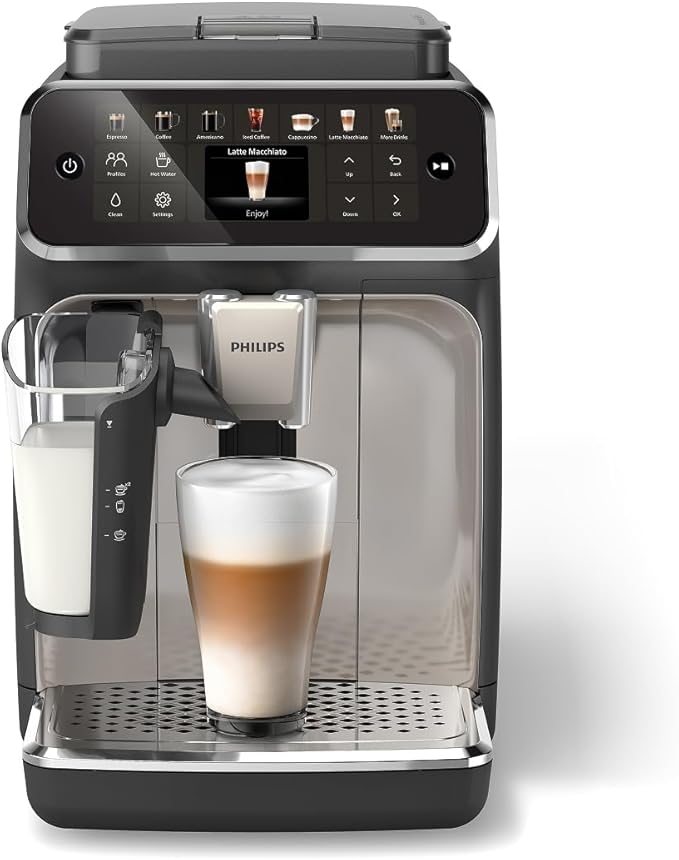
| Philips 4400 Series | Households needing a one-button automatic for guests | Run the M3 for personal espresso, the Philips for milk drinks and quick rounds. |
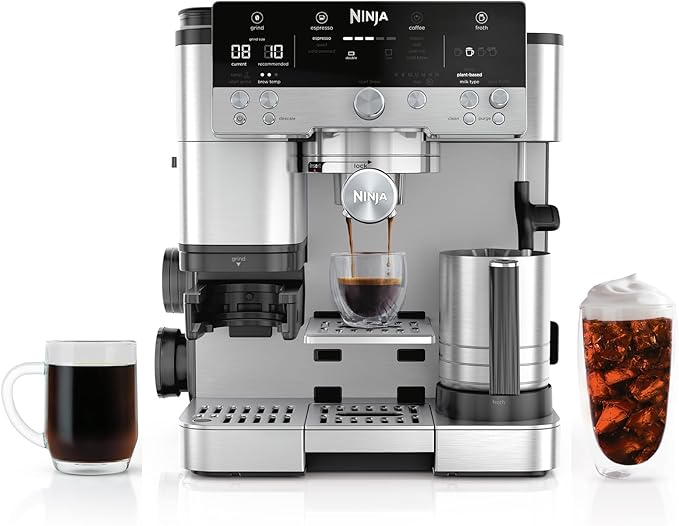
| Ninja Luxe Cafe Premier | Mixed-drink workflows alongside the M3 | The 3-in-1 brew modes cover non-espresso drinks while the M3 handles serious shots. |
Breville Barista Express BES870XL
The Barista Express is the most common upgrade path into prosumer espresso, and many M3 owners keep one on the counter as a reliable second machine for guests or as the first stepping stone before a dedicated dual-boiler. Its 15-bar pump, PID-controlled thermocoil, and 54mm portafilter accept the M3's grounds without complaint. The built-in conical grinder is the part you can finally ignore. Check the Breville Barista Express on Amazon.
Philips 4400 Series Fully Automatic
For households where one partner pulls hand-tamped shots from the M3 while the other wants a one-button cappuccino, the Philips 4400 is the diplomatic answer. The LatteGo system handles milk without tubing to clean, and the bean hopper means you can leave commodity beans in the Philips and keep your good single-origin reserved for the Versalab. See the Philips 4400 Series on Amazon.
Ninja Luxe Cafe Premier 3-in-1
If your household drinks more iced lattes and cold brew than straight espresso, the Ninja Luxe Cafe Premier complements the M3 by handling everything that is not a 1:2 ratio shot. The 3-in-1 brew modes let you keep the M3 for serious espresso work while the Luxe Cafe covers volume and variety. View the Ninja Luxe Cafe Premier on Amazon.
Workflow: single-dosing the Versalab M3
The M3 was designed before single-dosing became fashionable, but its low-retention geometry adapts well. Most owners weigh beans into a small cup, drop them in the top, and catch grounds in a dosing cup at the chute. There is no auger, no sweeper, no anti-static spray ritual required for most beans. Light roasts may benefit from a quick spritz of water (the RDT technique) but the M3's grounded chassis keeps static lower than most flat-burr competitors.
For workflow obsessives—and the overlap between hi-fi collectors and workflow obsessives is nearly total—this means the M3 fits naturally into a deliberate, ritualized morning routine. Weigh, dose, grind, distribute, tamp, brew. Each step is mechanical, repeatable, and silent except for the burrs themselves.
Build quality parallels with audio gear
Pick up the M3 and the first thing you notice is mass. The chassis is machined aluminum and steel, not folded sheet metal or zinc-alloy castings. The fit and finish are workshop-grade rather than consumer-grade—edges are deburred, fasteners are stainless, and the assembly is meant to be disassembled. This is the same philosophy that drives McIntosh's chassis construction or the way a Jeff Rowland amplifier is bolted together.
The M3 is also one of the few grinders where the manufacturer expects you to perform alignment yourself. Versalab publishes the procedure. You buy a dial indicator, you check runout, you shim. For someone who has aligned a Decca London cartridge with a protractor or set overhang on an SME tonearm, this is a familiar ritual rather than a chore.
Where the M3 falls short
The versalab m3 grinder review honesty section: this is not a perfect machine. The chute is slightly messier than modern single-dose grinders, the included tamper is utilitarian, and the aesthetics are industrial rather than display-piece elegant. There are no LED readouts, no Bluetooth, no app. If your kitchen is curated like a design magazine, the M3 may look out of place next to a La Marzocco Linea Mini.
It is also expensive for what it does not do. There is no built-in scale, no timer, no preset programming. You pay for mechanical excellence and accept that everything around the burrs is your responsibility. For the target buyer, this is the entire appeal.
Who should buy the Versalab M3
This versalab m3 grinder review concludes with a narrow but firm recommendation. Buy the M3 if you already own audio equipment you maintain yourself, if you prefer mechanical adjustments to firmware updates, and if you intend to keep the same grinder for fifteen or twenty years. Skip it if you want one-touch convenience, or if you would rather spend the alignment time pulling extra shots.
The home-barista community in 2026 is large enough that there is a grinder for every philosophy. The M3 is the one for collectors who chose vinyl over streaming, tubes over chips, and direct-drive over servo-controlled. If that is you, you already knew the answer before you opened this page.
Frequently Asked Questions
Is the Versalab M3 worth it in 2026 compared to newer alignment-system grinders?
For buyers who specifically reject electronic alignment, yes. The M3's mechanical-shim approach has not been superseded—it has been ignored by an industry that prefers to sell motorized convenience. New alignment-system grinders like the Lagom P64 are excellent, but they rely on screws and springs that can drift, and on bearings whose preload changes with use. The M3 lets you verify alignment with your own indicator at any time.
How does the Versalab M3 handle light roast espresso?
The vertical conical burrs do well with medium and medium-light roasts. For very light Nordic-style roasts, flat burr grinders with SSP burrs still have an edge in clarity. The M3's strength is body and texture, which makes it more at home with the SCAA-medium to omni-roast range that hi-fi collectors tend to drink alongside vinyl listening sessions.
Can I align the Versalab M3 burrs myself without sending it to the manufacturer?
Yes—this is the entire point of the design. You need a dial indicator (under $40 for a workshop-grade Mitutoyo clone) and brass shim stock. Versalab publishes the procedure. Most owners check alignment annually and shim only if drift is measurable. Compare this to electronic alignment grinders, which require a return-to-manufacturer service for the same operation.
What espresso machine pairs best with the Versalab M3 for someone on a budget?
The Breville Barista Express BES870XL is the most common pairing for owners who already spent the budget on the M3. Its PID-controlled boiler is forgiving of grind variation as you dial in, and the 54mm basket accepts a wide dose range. Long-term, M3 owners tend to migrate to a dual-boiler or lever machine, but the Breville is a defensible starting point.
How long does a Versalab M3 last with daily use?
Owners who service the unit themselves report 15 to 20 years on original burrs with daily home use, longer if they replace burrs at the first sign of fines drift. The DC motor is the typical wear item, and replacement motors are user-installable. This longevity directly echoes how hi-fi collectors evaluate amplifiers and turntables—buy once, service forever.
Does the Versalab M3 have retention issues for single-dosing?
Retention is low for a non-purpose-built single-dose grinder—typically under 0.5g with the chute brushed after each dose. The vertical geometry lets gravity do most of the work. If you obsess over zero retention, dedicated single-dose grinders like the Weber Key or DF64 Gen 2 will beat the M3 by a small margin, but the M3's grind quality compensates.
Is the Versalab M3 too loud to use in an apartment?
The M3 is quieter than most direct-drive grinders thanks to its belt-driven motor, but it is not silent. At roughly 70 dB during a 20-second grind, it sits between a quiet conversation and a vacuum cleaner. For a hi-fi collector accustomed to the sound of a stylus dropping or a tube amp warming, it is a familiar and acceptable mechanical noise.
For more reading, see our guides to single-dose grinders for home baristas, the best grinders for light roast espresso, and coffee setups for audiophile listening rooms.
Key Takeaways
- Choosing the right versalab m3 grinder review means matching capacity and output ports to your actual devices
- Always check actual watt-hours (Wh), not just watts — runtime depends on Wh, not peak output
- Also covers: versalab m3 analog grinder
- Also covers: versalab m3 burr alignment system
- Also covers: versalab m3 vs ek43
- Compare price-per-Wh across models to find the best value for your budget