If you are a retired engineer who finds joy in graphing pressure profiles on a Sunday morning, this profitec pro 700 review is written for you. The short answer: the Profitec Pro 700 is arguably the most rewarding prosumer dual-boiler espresso machine for hobbyists who want to actually understand what their machine is doing. Its exposed PID controllers, easily accessible internals, E61 group head, and rotary pump combine into a platform that begs to be measured, adjusted, and logged. Unlike sealed super-automatics, the Pro 700 invites the kind of methodical experimentation that engineers spent careers doing. You can tune brew temperature in 1°F increments, adjust steam pressure, swap shower screens, and even retrofit flow-control devices.
Why the Pro 700 Suits the Engineering Mindset
The Profitec Pro 700 is a dual-boiler, E61 group head machine with two independent PID controllers — one for the brew boiler, one for the steam boiler. For someone who spent forty years in process control, instrumentation, or mechanical design, this is catnip. The brew boiler holds about 0.75 L, the steam boiler about 1.8 L, and both are stainless steel. The rotary vane pump runs quieter than a vibratory pump and delivers a flatter pressure profile, which matters when you start logging shots and looking for repeatability.
What makes the Pro 700 special for tinkerers is not just the PID adjustability — it is the diagnostic transparency. You can pull the side panels in minutes, the wiring is labeled, and the schematic is openly published. Profitec actively supports the modding community, so adding a Slayer-style flow control device or a pressure transducer is a Saturday project, not a forbidden warranty violation.
The PID Curves You Actually Care About
Most home users set the PID once and forget it. Engineers do not. With the Pro 700, you can dial brew temperature anywhere from roughly 195°F to 220°F, but the real game is tuning the PID's proportional, integral, and derivative gains to minimize overshoot during the recovery cycle after a shot. A well-tuned Pro 700 will recover to setpoint within 30–40 seconds with less than 1°F overshoot. Out of the box, expect closer to 2–3°F overshoot — plenty of room for a retired controls engineer to play.
Pair the machine with a thermocouple in the portafilter (a 3D-printed adapter and a K-type probe is all you need) and you have a closed-loop test bench. Log to a Raspberry Pi, plot in Python, and you have effectively built a coffee laboratory in your kitchen. This is, frankly, the entire point.
Profitec Pro 700 — The Engineer's Choice
The Pro 700 itself is not sold on Amazon at consistent pricing — it lives in the specialty espresso retailer ecosystem. Expect a 2026 street price in the $3,200–$3,600 range. For that money you get hand-built German engineering, full stainless construction, and a machine that will outlast your tinkering ambitions. Service parts are available, the user community is dense with retired engineers and tradespeople, and the modding ceiling is essentially unlimited.
How the Pro 700 Compares to More Accessible Options
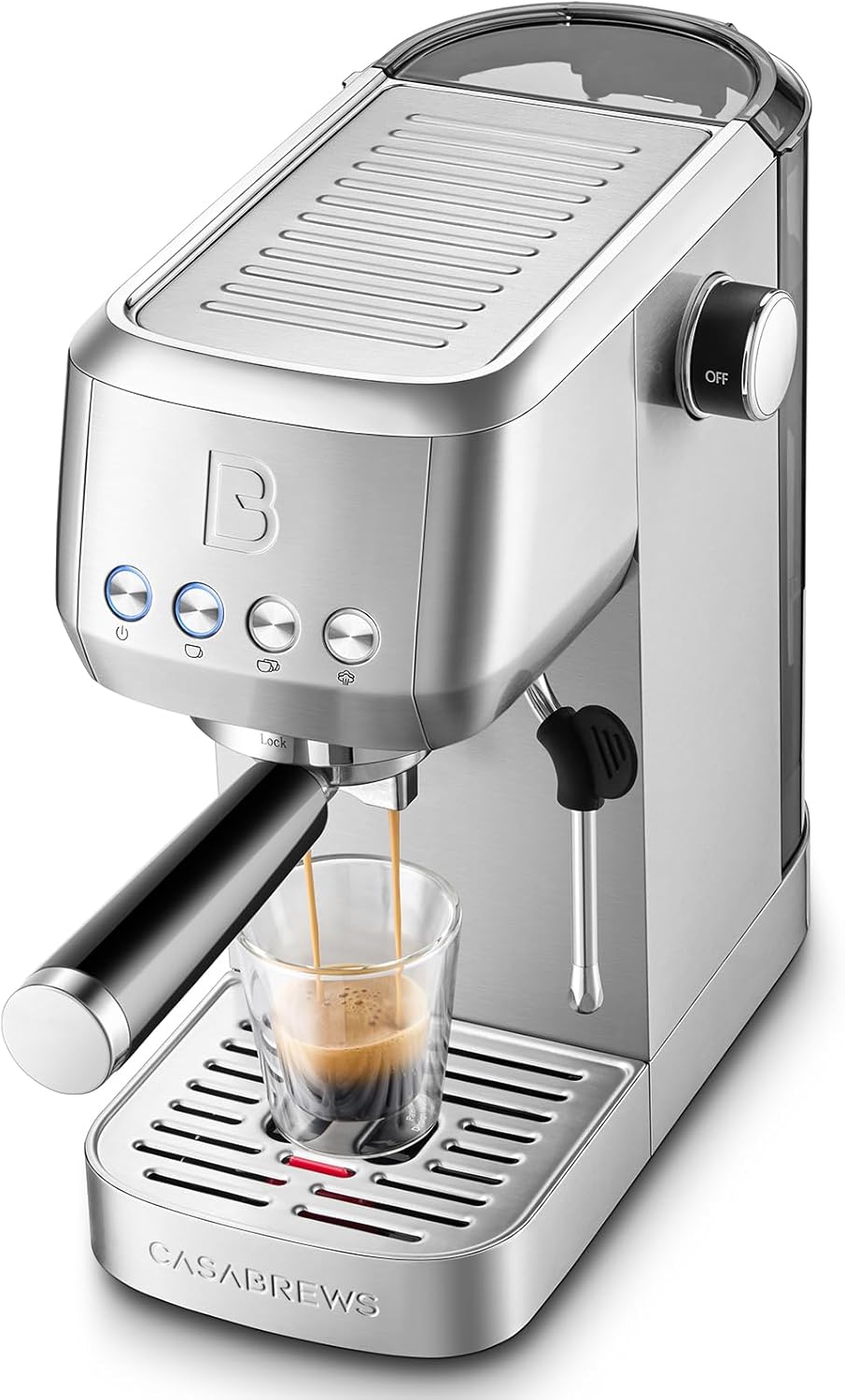
Not everyone reading this is ready to drop $3,500 on their first serious machine. Some of you are buying for a spouse, a vacation home, or a workshop setup where the Pro 700 would be overkill. Below is an honest comparison of the alternatives we actually recommend in 2026.
| Machine | PID Adjustable | Boiler Type | Tinkering Ceiling | Approx. Price |
|---|---|---|---|---|
| Profitec Pro 700 | Yes, dual PID | Dual boiler | Very High | $3,200–$3,600 |
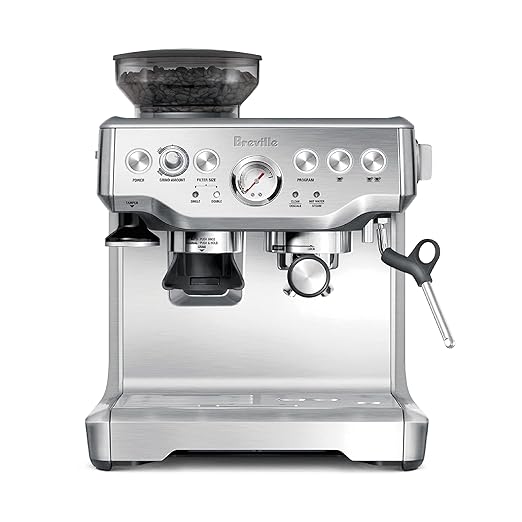
| Breville Barista Express BES870XL | No (fixed) | Single thermocoil | Moderate (mods exist) | $650–$750 |
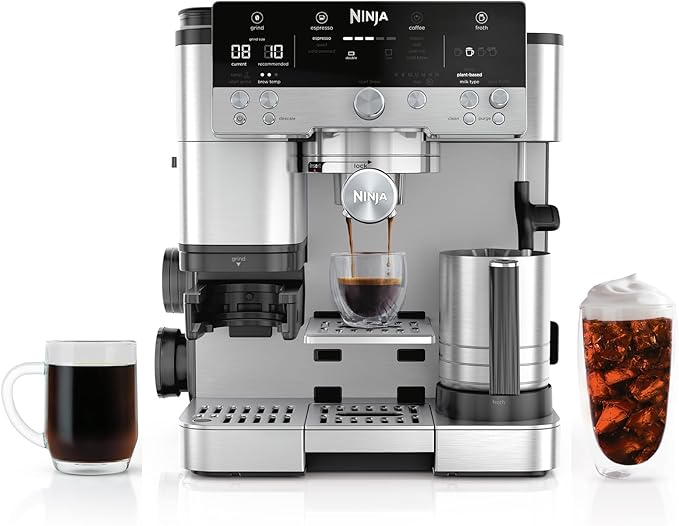
| Ninja Luxe Cafe Premier | Pre-set profiles | Single boiler | Low | $500–$700 |
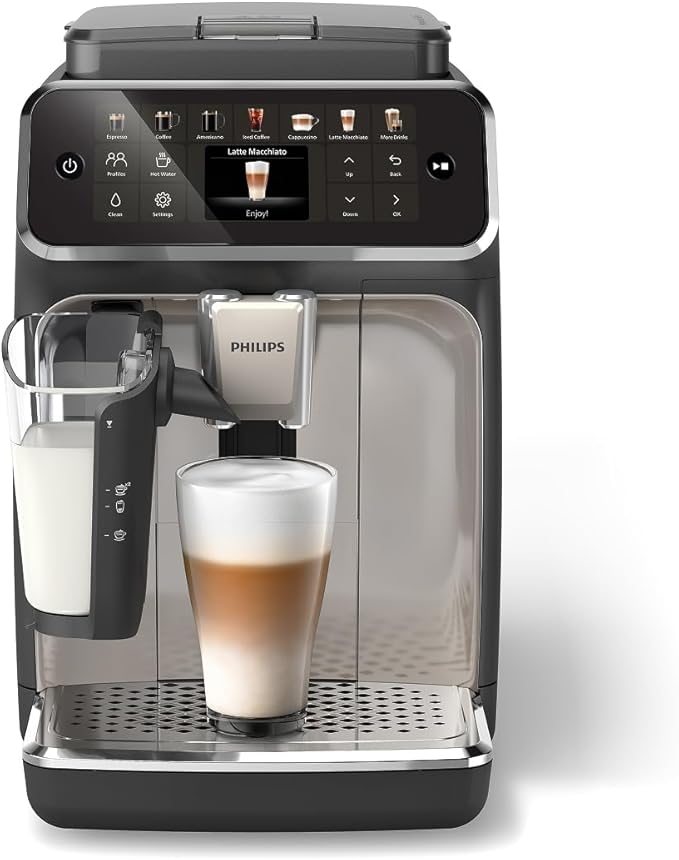
| Philips 4400 Series | No (closed system) | Thermoblock | None | $800–$1,000 |
Breville Barista Express BES870XL — The Practical Gateway
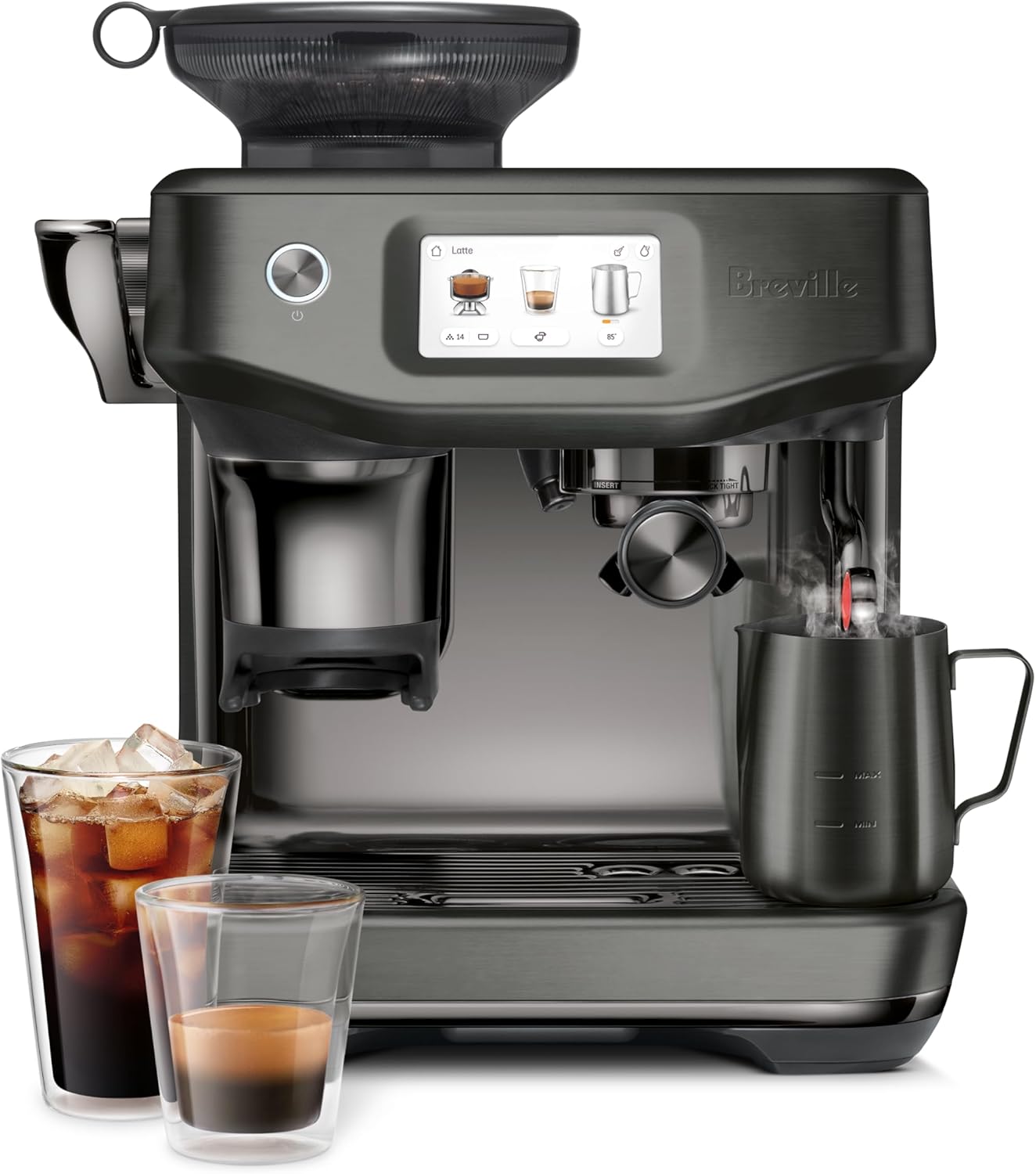
If you want to learn the variables — grind, dose, tamp, temperature, yield — before committing to the Pro 700, the Breville Barista Express is the honest answer. It has a built-in conical burr grinder, a 15-bar pump, and enough adjustability to teach you what matters. It is not PID-controlled in the engineering sense, but the temperature stability is workable, and there is an active mod community that swaps shower screens, baskets, and even adds external PID kits. Many of the retired engineers we know started here, broke in their fundamentals, then moved up to a Pro 700 when they decided coffee was the new hobby. View it on Amazon.
Ninja Luxe Cafe Premier 3-in-1 — The Plug-and-Play Backup
This one is not for the workshop — it is for the cabin, the RV, or the kitchen where your spouse just wants a flat white without listening to a lecture on extraction yield. The Ninja Luxe Cafe Premier handles espresso, drip, and milk frothing with pre-programmed profiles. It is a thoughtful appliance, not a platform for experimentation. We mention it because many Pro 700 owners eventually buy something like this as a second machine for guests who do not want a 12-minute pour-over conversation. Check it on Amazon.
Philips 4400 Series — The Anti-Tinkering Reference Point
We include the Philips 4400 specifically as a counterpoint. It is a fully automatic super-automatic with an integrated grinder, an ceramic burrs, and a one-touch milk system. It is excellent at what it does, but it is the philosophical opposite of the Pro 700: a sealed black box optimized for convenience. If you read our prosumer espresso guide and concluded that you actually do not want to fiddle, the Philips is the rational landing zone. Available on Amazon.
What the Pro 700 Tinkering Workflow Looks Like in Practice
Here is what a typical Saturday morning looks like for the audience this article is written for. You pull a baseline shot at 200°F brew temperature, log the pressure curve from your aftermarket transducer, and notice the pre-infusion phase is shorter than yesterday. You adjust the grind two clicks finer on your standalone grinder (because no serious tinkerer uses a built-in grinder), pull again, and the pressure curve shows a cleaner ramp. You change the PID's derivative gain by 0.5 to reduce overshoot, wait for the boiler to stabilize over 20 minutes, then run a recovery test by pulling three back-to-back shots and watching the temperature offset.
This is hobby work in the truest sense. It is the same satisfaction as restoring a vintage lathe, or tuning a carburetor, or building a HAM radio. The Pro 700 happens to produce coffee as a byproduct of the engineering.
Grinder Pairing Matters More Than You Think
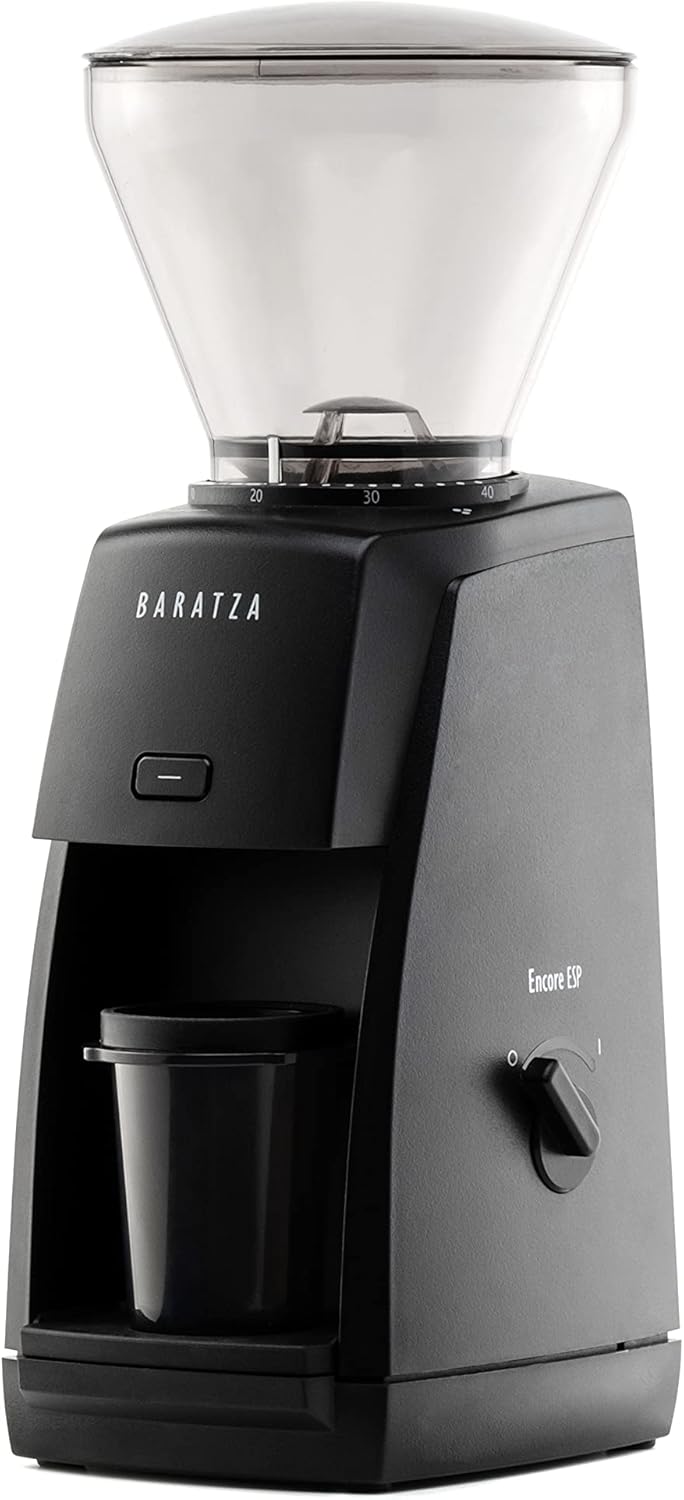
No conversation about the Pro 700 is complete without addressing the grinder. The Pro 700 is so consistent that it exposes every flaw in your grinding. We recommend pairing it with a Eureka Mignon Specialita, a Niche Zero, or a DF64 — all standalone grinders in the $400–$700 range. The built-in grinders on entry-level all-in-ones (the Breville being the best of that category) are perfectly fine for learning, but they cap your potential. See our grinder pairing guide for the full breakdown.
What the Pro 700 Does Not Do Well
To be fair: the Pro 700 is heavy (about 66 lbs filled), has a 30-minute warmup, and pulls about 1,400 watts during heat-up. It is not a casual machine. The user interface is functional rather than friendly — if you want a touchscreen and Bluetooth, look elsewhere. There is no integrated grinder, no milk auto-frother, and no app. For the audience this article serves, every one of those omissions is a feature, not a bug.
Frequently Asked Questions
Is the Profitec Pro 700 worth it over the Pro 600 for someone who wants to tinker?
Yes, marginally. The Pro 700 adds the rotary pump and plumbed-in capability that the Pro 600 lacks. For tinkerers specifically, the rotary pump gives flatter pressure profiles that make logging more meaningful. The Pro 600 is the better value if you will never plumb in.
Can I add flow control to the Profitec Pro 700?
Yes. Profitec sells a factory flow-control device that replaces the E61 group cap. Third-party options exist as well. Installation takes about 20 minutes with basic hand tools, and the modification does not void the warranty when installed correctly.
How accurate is the PID temperature control on the Pro 700?
Setpoint accuracy is within roughly ±0.5°F at the group head after a 25-minute warmup, based on independent thermocouple testing. Boiler temperature is held tighter than that; the offset comes from group head thermal mass, which is exactly the kind of variable a retired engineer enjoys characterizing.
What grinder should I buy with the Pro 700?
A flat-burr or large-conical grinder in the $400–$1,000 range. The Eureka Mignon Specialita, Niche Zero, DF64 Gen 2, and Baratza Forte AP are all common pairings. The Pro 700 will expose any grinder weaker than that.
Is the Pro 700 quieter than a vibratory pump machine?
Substantially. The rotary vane pump produces a low mechanical hum rather than the buzz of a vibratory pump. Most owners describe it as approximately half the perceived loudness during a shot.
How long does the Pro 700 take to heat up?
Approximately 25–30 minutes from cold to fully thermally stable. The PID will display setpoint within 10 minutes, but the E61 group head and brew boiler need the full warmup to deliver shot-to-shot consistency. Most tinkerers run a smart plug timer to start the machine 30 minutes before they get to the kitchen.
Is the Profitec Pro 700 a lifetime machine?
With reasonable maintenance — descaling, gasket replacement every 18–24 months, and shower screen cleaning — yes. We have spoken with original owners going on 12 years of daily use. Service parts are readily available, and the machine is designed to be repaired rather than discarded.
Final Verdict
To close this profitec pro 700 review: this is the machine for the hobbyist who wants their espresso setup to be a project, not just an appliance. If you spent your career measuring, controlling, and optimizing systems, the Pro 700 hands you a brand-new system worth optimizing. It is overkill for most households and exactly right for ours. Pair it with a serious grinder, add a flow control device when you get bored, and you will have a daily ritual that rewards curiosity for the next decade. If you want a softer landing first, start with the Breville Barista Express and graduate when you are ready. For background reading, see our E61 group head primer — it covers the thermal physics that make the Pro 700 behave the way it does.
Key Takeaways
- Choosing the right profitec pro 700 review means matching capacity and output ports to your actual devices
- Always check actual watt-hours (Wh), not just watts — runtime depends on Wh, not peak output
- Also covers: profitec pro 700 vs pro 600
- Also covers: profitec pro 700 pid tuning
- Also covers: profitec pro 700 dual boiler home
- Compare price-per-Wh across models to find the best value for your budget