For road trippers in camper vans, rented EVs, motorcycles, classic cars, or any vehicle missing a working cigarette-lighter socket, the Outin Nano portable for road trips without 12V outlet is the only mainstream battery-powered espresso maker that does not depend on your vehicle's electrical system at all. Its built-in 7,500 mAh lithium battery and USB-C charging port mean you can pull a true 9-bar shot from a campsite picnic table, a hotel balcony, or the side of a desert highway—charging the unit overnight from any wall outlet, a USB-C power bank, or even a folding solar panel. This 2026 guide explains exactly how the Nano works off-grid, what charging gear keeps it brewing across multi-day trips, and which home espresso machines make sensible bases for when you roll back into the driveway.
Why "no 12V outlet" is a bigger problem than it sounds
A surprising number of modern vehicles ship without a traditional 12V cigarette-lighter socket. Tesla Model 3 and Model Y interiors dropped the port in 2021. Many newer Ford, Hyundai, and Kia trims replace it with USB-C only. Motorcycles, sailboats, and rental cars often have the socket buried under a panel or wired to ignition-only power. And if you are sleeping in a converted Sprinter, Promaster, or rooftop tent, you may not want to drain your starter battery brewing breakfast.
Most "car espresso makers" sold on Amazon are actually 12V-only devices that plug into that lighter port and pull 120–150 watts while heating water. Without the socket, they are paperweights. The Outin Nano is fundamentally different: it is a self-contained battery appliance that happens to be small enough to ride in a glove box.
How the Outin Nano brews without any vehicle power
The Nano packs a 7,500 mAh lithium-ion cell, a small heating coil, and a 20-bar piston pump into a 1.3 lb cylinder roughly the size of a Hydro Flask. A full charge takes about 90 minutes over USB-C PD (18W input recommended) and delivers, in cold-start mode:
- Roughly 3 shots from cold water heated internally to ~200°F, or
- Roughly 5–6 shots if you pre-fill the chamber with hot water from a kettle or thermos.
That second number is the secret. On a real road trip, you almost always have access to hot water somewhere—a hotel coffee station, a campground spigot warmed by a JetBoil, the hot-tap in a gas-station bathroom. Pre-warming the Nano's chamber means the heater barely runs, the battery lasts dramatically longer, and the shot pulls in about 35 seconds instead of three minutes.
The Outin Nano portable for road trips without 12V outlet: a realistic charging stack
Here is the actual gear that keeps the Outin Nano portable for road trips without 12V outlet running for a week-long trip with no cigarette socket in sight:
- A 20,000 mAh USB-C PD power bank (anything rated 18W output or higher). One full power bank charges the Nano roughly 2.5 times, which is 7–15 shots depending on whether you pre-heat water.
- A 60W USB-C wall charger for hotel nights. The Nano accepts up to 18W but a 60W brick lets you charge phone, power bank, and Nano simultaneously.
- A 21W folding solar panel with USB-C output for backcountry days. On a clear afternoon parked at a trailhead, two hours of sun puts a full day of espresso back into the battery.
- Pre-ground capsules or a hand grinder like the 1Zpresso Q2. The Nano accepts both Nespresso Original capsules and a refillable ground-coffee basket; grinding fresh on the road tastes noticeably better.
For more options on portable batteries that pair well with espresso gear, see our deeper look at USB-C power banks for portable espresso makers.
What the Outin Nano is not good at
Honest disclosure: the Nano makes one shot at a time, around 1.5–2 oz. It cannot steam milk—there is no wand, no frother. For two people who both want cappuccinos at a campsite, you will be brewing back-to-back for 10 minutes and then frothing milk separately with a handheld whisk or a French-press plunger. It is also a poor choice for anyone who wants more than 4 drinks per day on the road; the battery and the cleanup cycle simply do not keep up.
That is where a serious home machine matters. The Nano is the road tool; you still want something on the kitchen counter that handles weekday lattes properly.
Home base espresso machines that complement a portable setup
Most Nano owners we hear from use it 3–8 times a month—on trips—and want a real machine at home for the other 25 days. The four picks below cover four common budgets and use cases. All are widely available and have track records you can verify in long-term reviews.
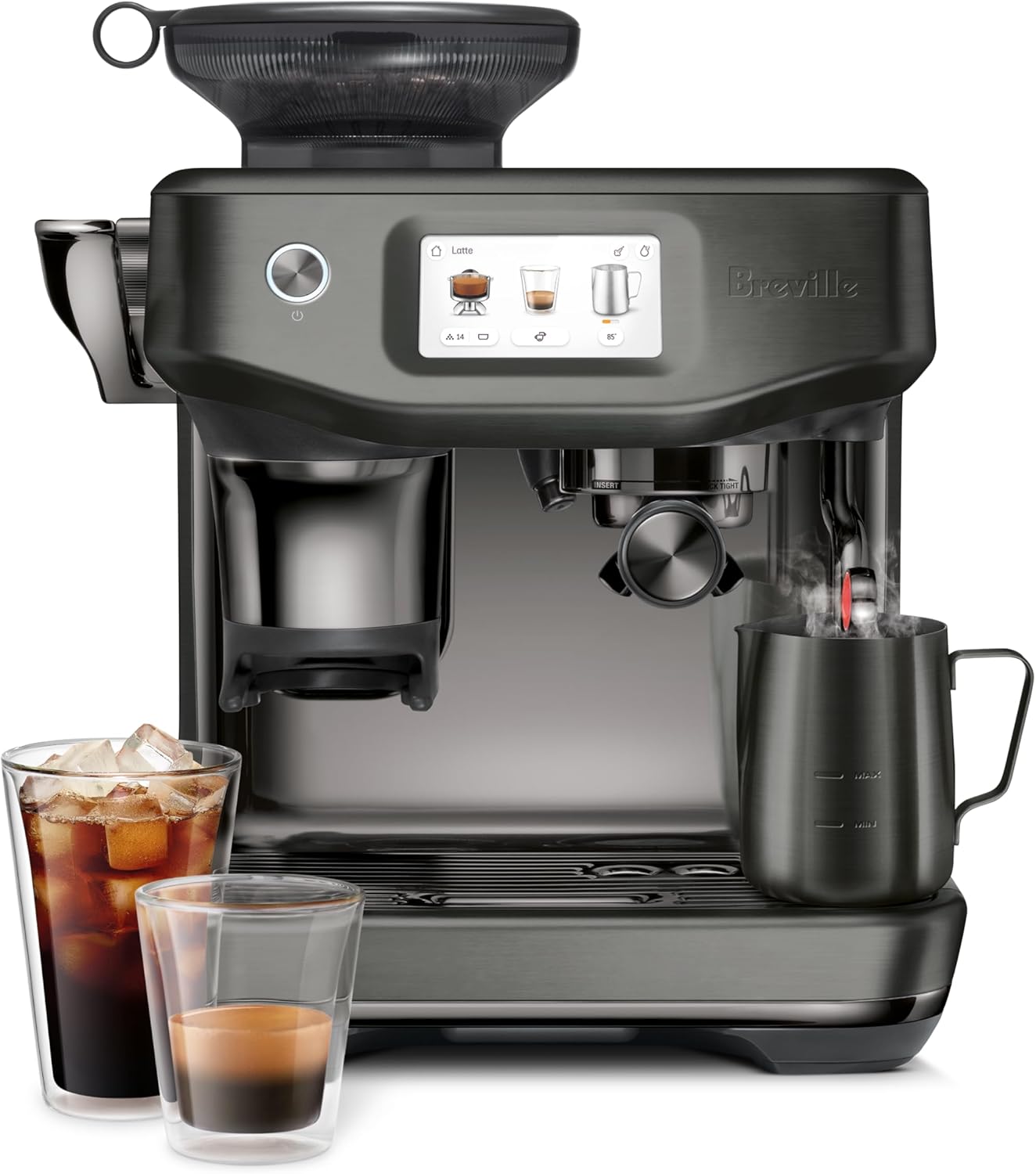
Breville Barista Express BES870XL — best all-around home base
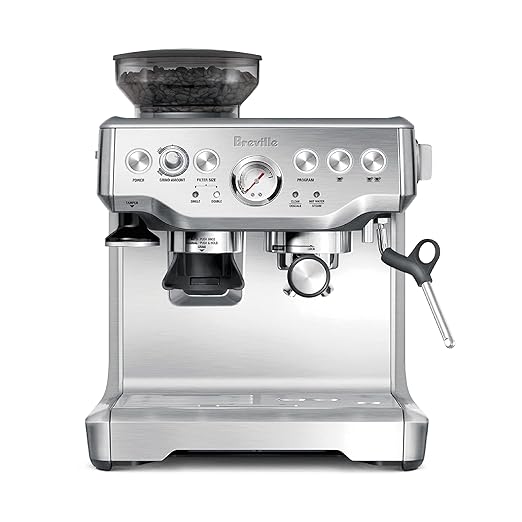
If you want one machine that does everything the Nano can't—conical burr grinder built in, a real 2-hole steam wand, dual-shot capability, PID-ish temperature stability—the Barista Express remains the default 2026 recommendation under $800. It is the machine most former Nespresso owners step up to, and most ex-Nano-only households eventually buy. Grinder hopper holds 250g, so a week of beans lives on the counter. Check current pricing at Breville Barista Express Espresso Machine BES870XL, Brushed .
Ninja Luxe Cafe Premier 3-in-1 — best for households that want drip and espresso
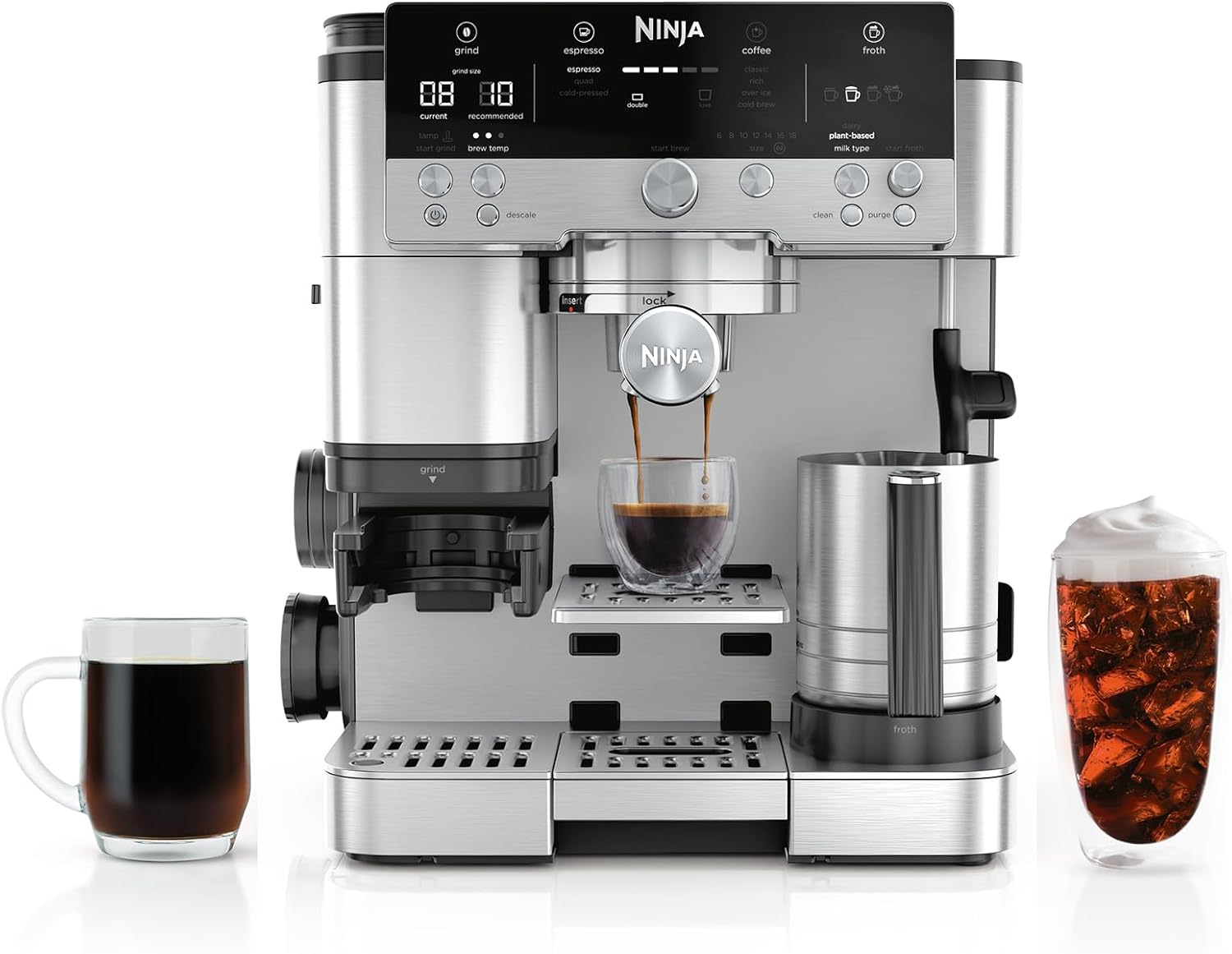
If half your house drinks pour-over and the other half wants flat whites, the Luxe Cafe Premier brews espresso, drip, and cold brew from a single chassis with an automatic milk frother that actually performs. It is a sensible "we travel sometimes but we also need to fuel a family on Sunday mornings" pick. See it at Ninja Luxe Café Premier 3-in-1 Espresso Machine, Drip Coffee.
Philips 4400 Series Fully Automatic — best for set-it-and-forget-it
If the Nano is your weekend toy and you want zero ritual on weekday mornings, a super-automatic with bean hopper, ceramic grinder, and one-touch milk system is the move. The Philips 4400 delivers lattes and cappuccinos at a button press and rinses itself. It is the opposite philosophy from the Nano, which makes it a surprisingly good complement. Listing: Philips 4400 Series Fully Automatic Espresso Machine – 12 Ho.
XIXUBX 20 Bar Compact Stainless — best budget home backup
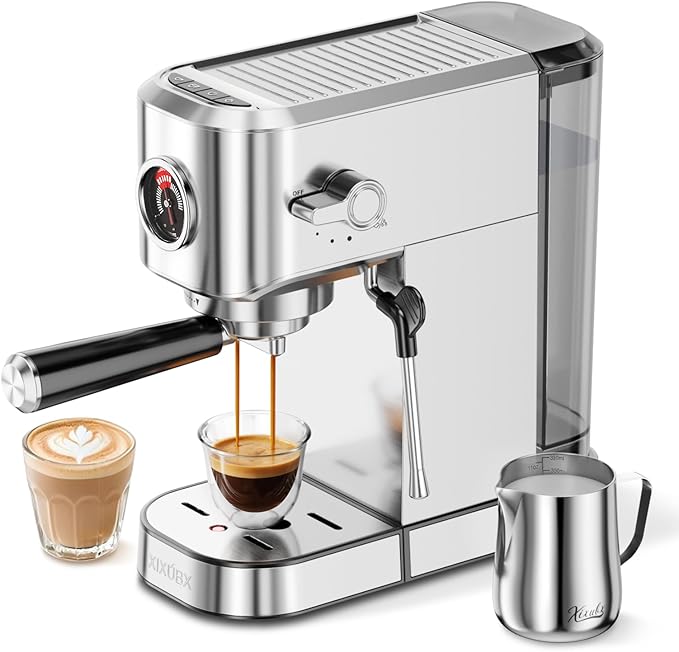
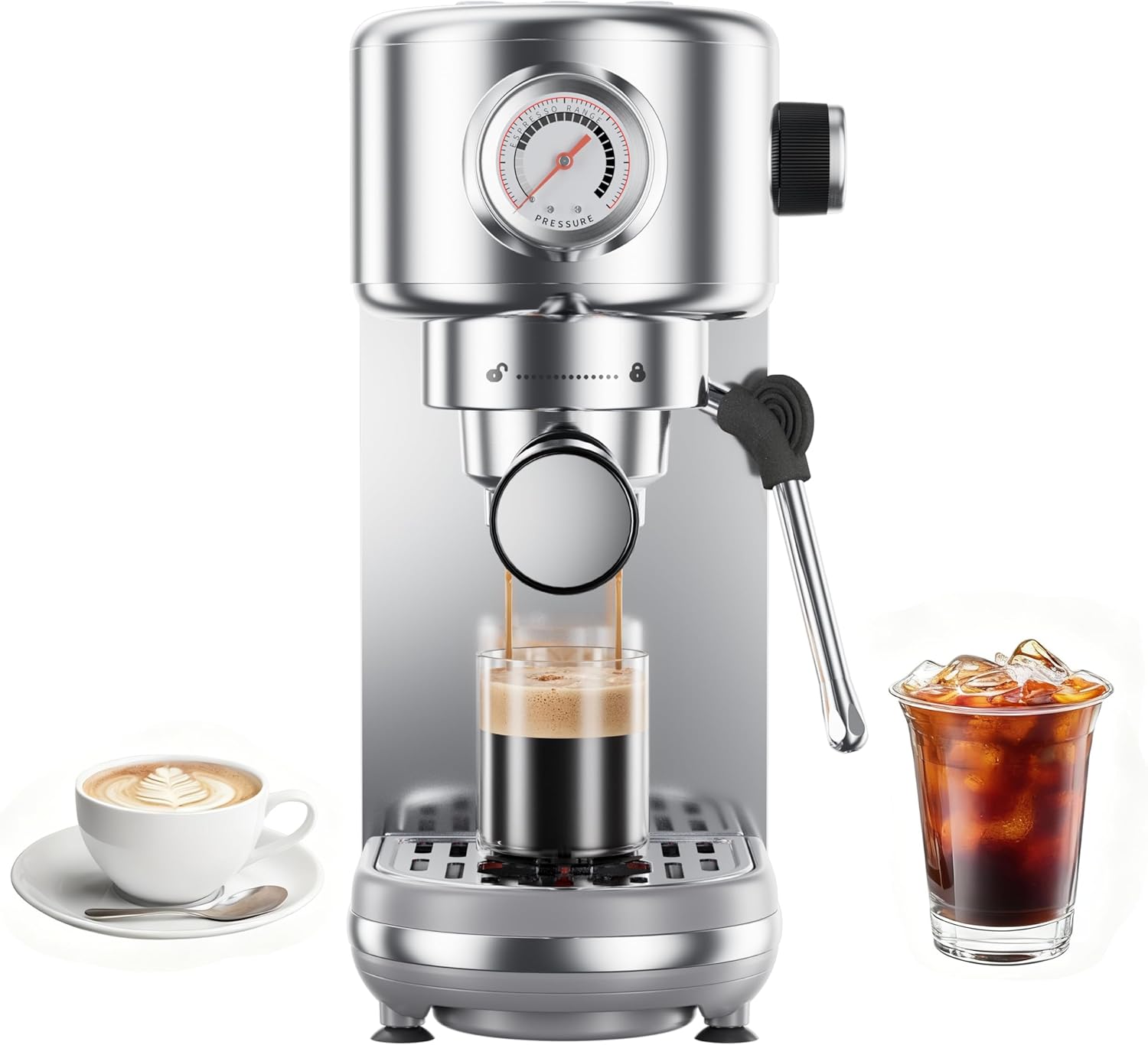
For under $150, the XIXUBX 20-bar compact pulls a respectable shot and steams milk via a panarello wand. It is the right pick if the Nano is your daily driver, you already own a hand grinder, and you only need a kitchen machine for the occasional weekend at home. Compact stainless body fits in a kitchenette or RV galley too. Link: XIXUBX 20 Bar Espresso Machine, Compact Stainless Steel Espr.
Home base machines compared
| Machine | Built-in grinder | Steam wand | Best fit | Approx. price |
|---|---|---|---|---|
| Breville Barista Express BES870XL | Yes, conical burr | Manual, 2-hole | All-around home barista | $650–$750 |
| Ninja Luxe Cafe Premier | Yes | Auto frother | Mixed-drink households | $500–$650 |
| Philips 4400 Series | Yes, ceramic | Auto LatteGo | One-touch weekday mornings | $850–$1000 |
| XIXUBX 20 Bar Compact | No | Manual panarello | Budget backup / RV galley | $120–$160 |
| atatix 20 Bar with Frother | No | Manual frother | Entry-level countertop | $100–$150 |
atatix Espresso Machine with Milk Frother — entry tier alternative
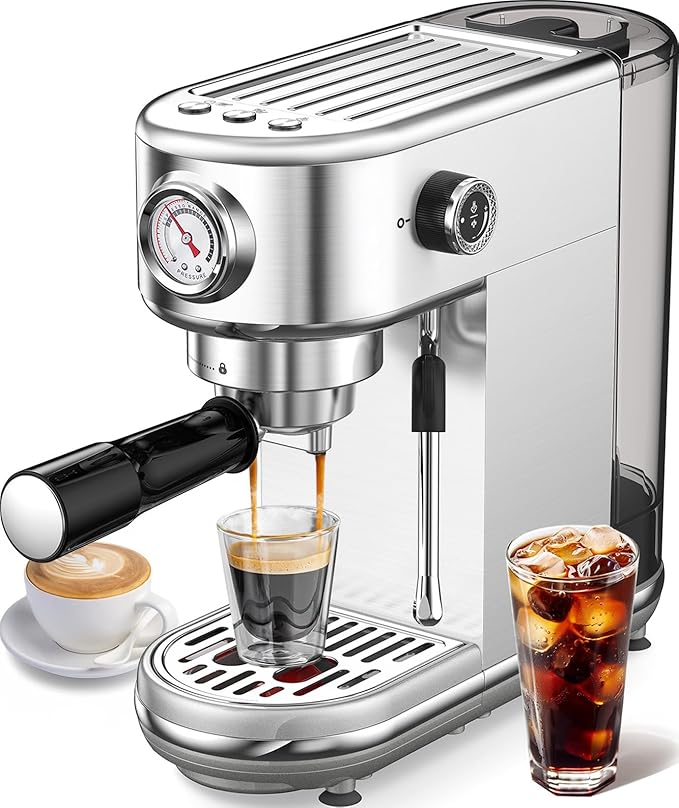
The atatix is essentially a sub-$150 thermoblock machine with a 20-bar pump and a basic milk frother wand. It is not in the same league as the Breville for shot quality, but for someone whose budget is mostly going into the Outin Nano plus a hand grinder, it is a defensible kitchen companion. Browse: atatix Espresso Machine with Milk Frother, 20 Bar Pressure E.
Packing the Nano: what veterans bring
After two summers of using a Nano across the Mountain West, here is the kit that actually rides with us:
- Outin Nano in its silicone sleeve
- Refillable basket plus a small Mason jar of pre-ground espresso (medium-fine, 9–10 on a 1Zpresso Q2)
- One 20,000 mAh USB-C PD power bank
- Small Stanley vacuum bottle of just-off-boil water (huge battery saver)
- Two Bodum double-wall espresso glasses, packed in socks
- Microfiber cloth and a soft brush for purging grounds
That whole kit fits in a packing cube about the size of a hardcover book. Combined with a small handheld milk frother and a half-gallon of shelf-stable oat milk, you have everything a campsite latte requires.
Maintenance on the road
The Nano needs three quick habits to survive sand, altitude, and hard water:
- Use bottled or filtered water only. Mineral content from gas-station taps will scale the heater within weeks.
- Rinse the chamber after every shot. A 10-second tap-water rinse with the pump running clears grounds before they cake.
- Descale monthly with a citric-acid solution, even on the road. A teaspoon of citric acid in 80 ml of water, pumped through, then two clean-water rinses, takes five minutes.
For broader portable maintenance tips, our portable espresso maker cleaning guide covers descaling intervals by water hardness.
Frequently Asked Questions
Can the Outin Nano really brew espresso without any 12V car outlet at all?
Yes. The Nano has its own 7,500 mAh battery and charges over USB-C, exactly like a phone. A full charge yields 3 cold-water shots or 5–6 shots if you pre-fill with hot water. You can use it in a Tesla, on a motorcycle, in a hotel room, on a beach—no vehicle connection required.
How many shots can I pull from one Outin Nano battery charge on a road trip?
Three shots from cold tap water on a full charge is the conservative number. With pre-heated water from a kettle or thermos, real-world users report 5 to 7 shots before the battery icon turns red. Carrying one 20,000 mAh USB-C power bank effectively triples that range without needing a wall outlet.
Does the Outin Nano work with Nespresso pods, or only ground coffee?
It accepts both. The included refillable basket handles freshly ground espresso (medium-fine), and a separate adapter takes original-line Nespresso capsules. Most travelers carry a small jar of fresh grounds plus 3–4 capsules as backup for mornings when grinding is impractical.
Is the Outin Nano safe to leave in a hot car?
Not above about 113°F (45°C) ambient. Like any lithium-ion device, sustained heat shortens battery life and, in extreme cases, can trigger thermal cutoff. On hot days, store it in a soft cooler or the shaded floor of the cabin, not on the dashboard.
Can I charge the Outin Nano from a portable solar panel?
Yes, with caveats. Any USB-C panel rated 18W or higher with PD output will work. A 21W folding panel like those from BigBlue or Anker tops up a depleted Nano in about 2 hours of strong sun. Cloud cover roughly doubles that. For multi-day backcountry trips, pair the panel with a 20,000 mAh power bank so you charge the bank during the day and the Nano at night.
Outin Nano vs Wacaco Picopresso for vehicles without 12V outlets—which wins?
The Picopresso is fully manual (hand pump, no battery, no heater) so it always works but requires you to bring hot water from elsewhere. The Nano heats its own water but needs charging. For van-lifers with kettles and stoves, the Picopresso is lighter and more reliable. For hotel-and-rental-car travelers who want to walk out to a viewpoint and brew, the Nano wins because it does not need external hot water.
Will the Outin Nano replace a real home espresso machine?
Not for daily use. The Nano makes one 1.5–2 oz shot at a time, has no steam wand, and takes a couple of minutes per pull when heating from cold. Most owners keep a countertop machine like the Breville Barista Express for weekday mornings and use the Nano strictly for travel, hiking, hotel stays, and outdoor adventures.
Where should I look next?
If you are still narrowing down a travel setup, our 2026 buyer's guide to portable espresso makers ranks the Outin Nano against the Wacaco Picopresso, Nanopresso, and Staresso. For pairing with a quiet hand grinder, see our hand coffee grinders for travel roundup.
As an Amazon Associate we earn from qualifying purchases. Prices and availability accurate at time of writing in 2026 and subject to change.
Key Takeaways
- Choosing the right Outin Nano portable for road trips without 12V outlet means matching capacity and output ports to your actual devices
- Always check actual watt-hours (Wh), not just watts — runtime depends on Wh, not peak output
- Also covers: Outin Nano battery only road trip
- Also covers: Outin Nano USB-C charging car
- Also covers: Outin Nano vs Wacaco Picopresso
- Compare price-per-Wh across models to find the best value for your budget