If you want to use the Mazzer Philos for data tracking home baristas, the short answer is this: log dose in, yield out, time, and grind worm-gear position for every shot, then plot yield-per-grind-step against TDS or perceived sweetness. The Philos exposes a stepless worm-drive collar with a printed reference scale (often 0–100) that makes grind position a true continuous variable you can dump into a spreadsheet, Beanconqueror, or a Notion database. Paired with a scale-equipped espresso machine, you finally get a clean independent variable—grind setting—to regress against extraction yield, channeling risk, and shot time without guessing.
Why the Mazzer Philos is built for shot-yield data work
Most home grinders give you a knob with a dot and a vibes-based memory of “two clicks finer than yesterday.” The Philos uses a worm-gear stepless adjustment with a numerically printed reference ring, which means your grind setting is a logged number rather than a vague feeling. For a data-driven home barista, that single design choice is the difference between a notebook full of useful regressions and a notebook full of “tasted a bit sour, opened it up some.”
The 64mm flat burrs run at a relatively low RPM, which keeps fines production stable across the grind range—important if you want yield-by-grind-setting data that actually means something instead of being polluted by retention swings. Single-dosing is the intended workflow, which gives you a clean per-shot record: bean lot, days off roast, dose, grind number, brew ratio, time, and weight out. That is exactly the kind of structured input that turns shot logging into a real dataset.
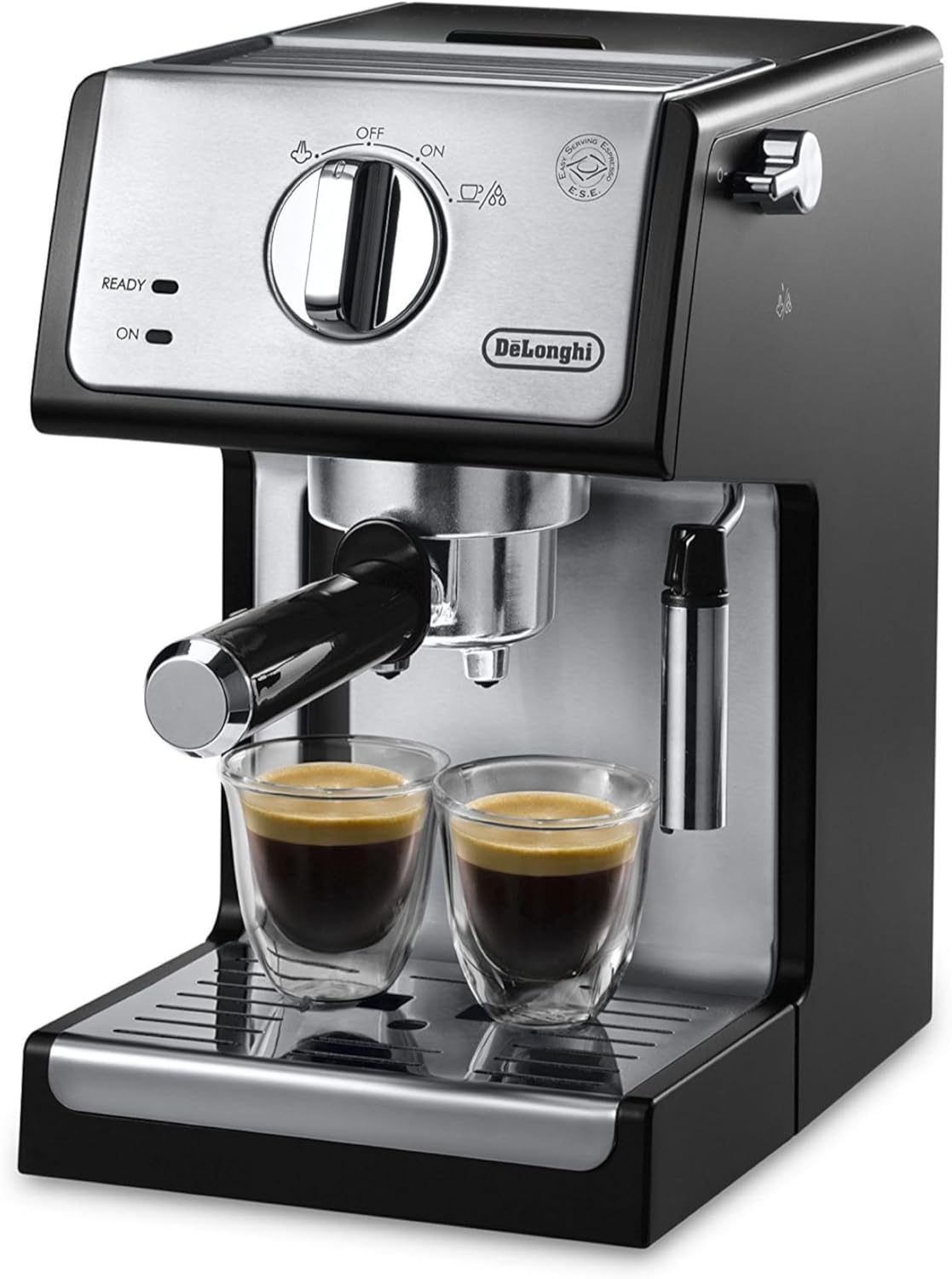
Using the Mazzer Philos for data tracking home baristas also means you can run controlled experiments: hold dose and machine pressure constant, sweep grind from, say, 35 to 55 in two-step increments, and record yield, time, and a sensory score. After 15–20 shots you have a curve that tells you the exact narrow band where your current bean hits target extraction—no more chasing the dial.
The espresso machine half of the equation
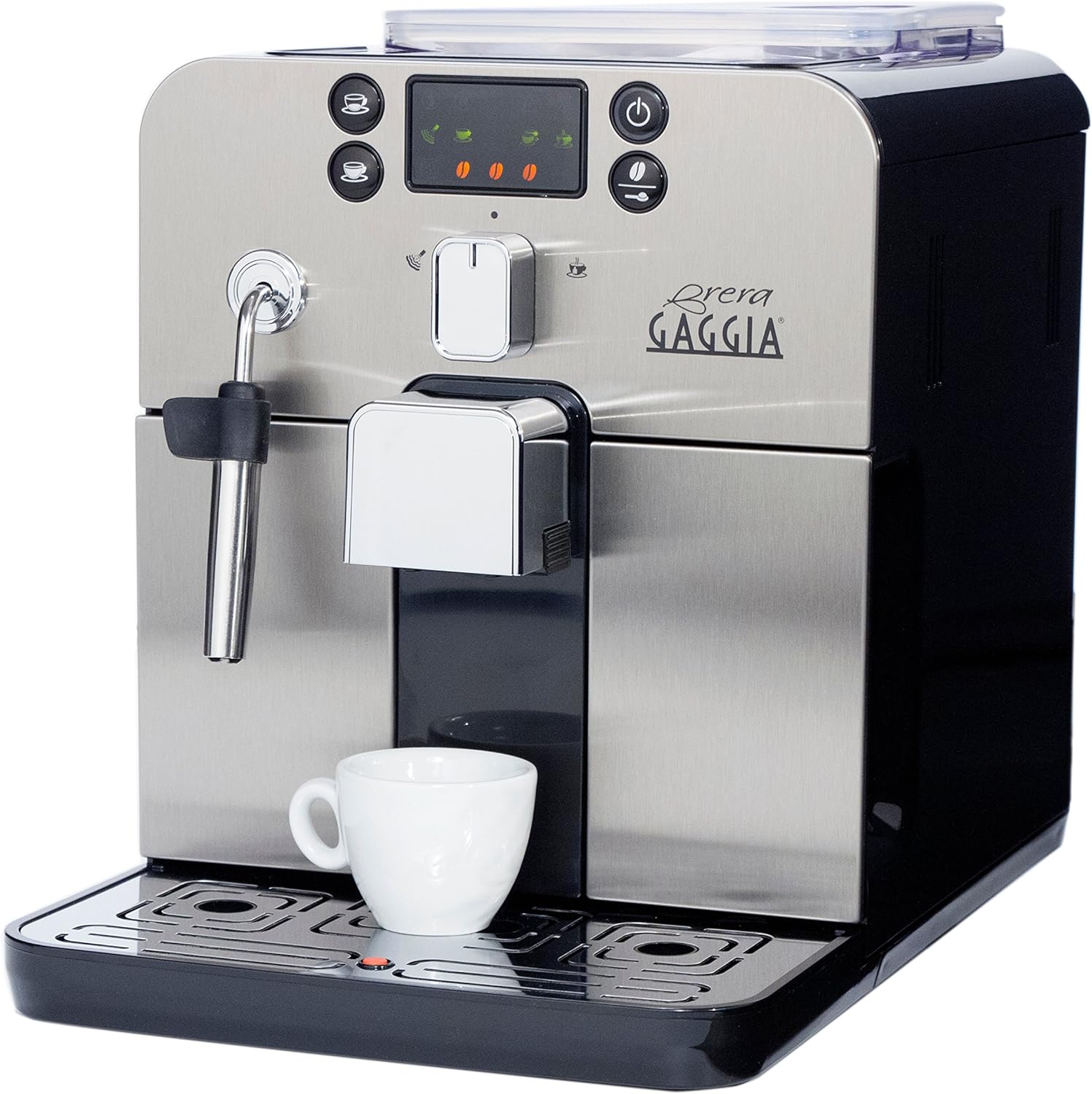
A grinder this precise needs a machine that won’t add noise to your data. Anything with stable temperature, repeatable pre-infusion, and ideally a built-in scale or a flat group you can park an Acaia on will work. Below are the machines most home baristas actually pair with Philos-class grinders when they’re trying to track yield against grind setting in 2026.
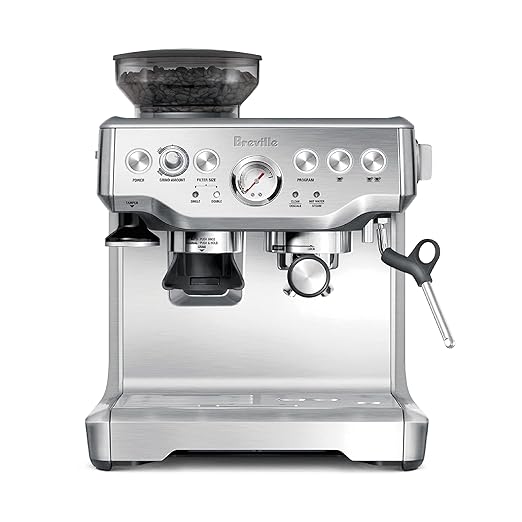
Best dual-boiler-feel pairing: Breville Barista Express BES870XL
The BES870XL is the entrenched workhorse for home baristas going from auto to manual control. Its 15-bar ThermoCoil group is stable enough for repeatable extractions, and the 54mm portafilter accepts a bottomless mod plus precision baskets—so when you sweep grind on the Philos, you actually see the resulting channeling or even pour in the spouts. Yes, it ships with an integrated conical grinder, but data-focused users typically lock that grinder at a fixed setting and feed pre-ground from the Philos for cleaner experiments. Check the Breville Barista Express BES870XL on Amazon.
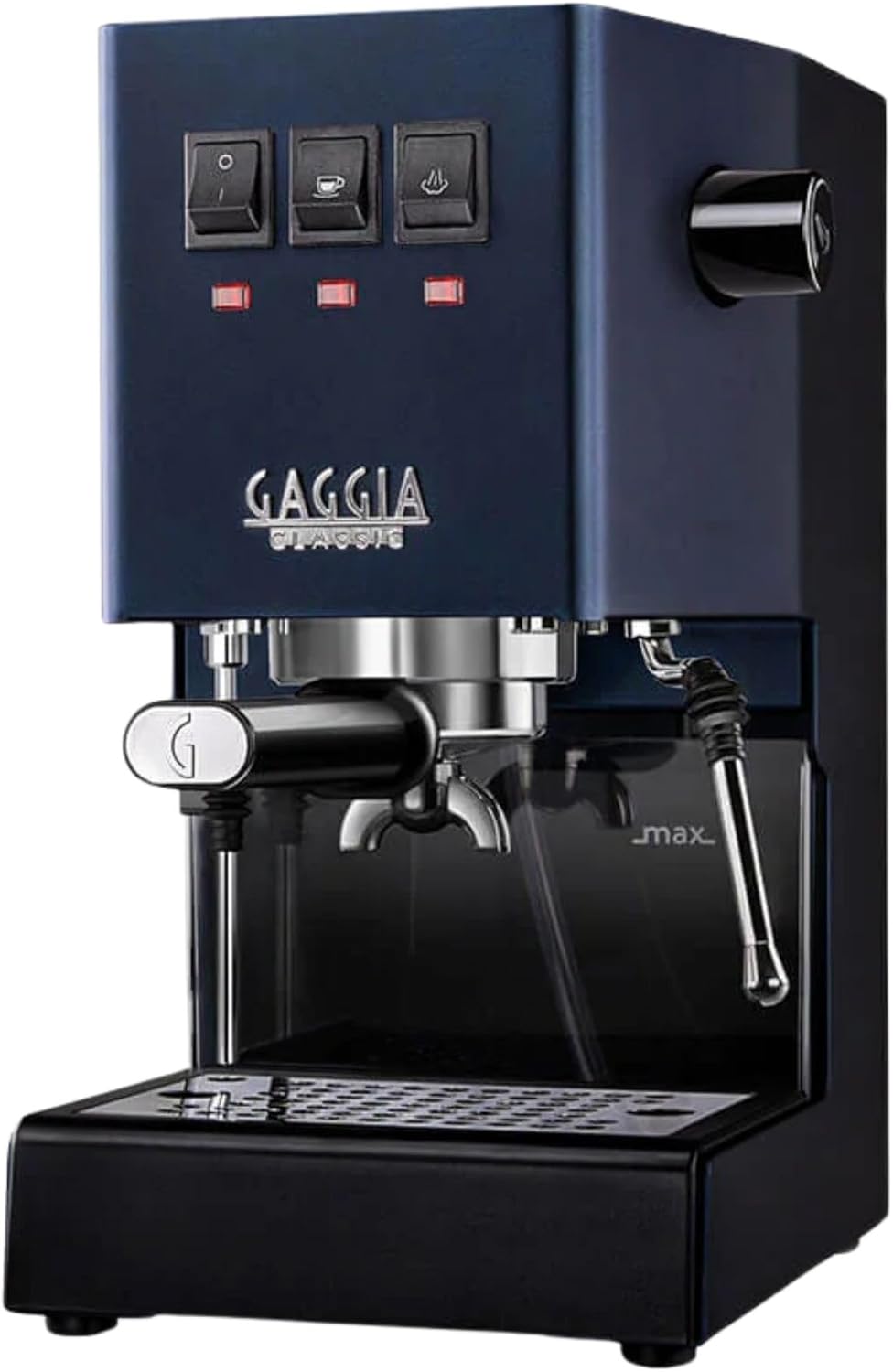
Best instrumented modern pairing: Ninja Luxe Cafe Premier 3-in-1
The Luxe Cafe Premier is the one to look at if you want machine-side telemetry. It runs an assisted tamp, pressure-guided extraction, and on-display shot feedback that you can cross-reference against grind-setting changes on the Philos. For data nerds, the value is the consistent puck prep loop: the variables you can’t control are minimized, so the variable you can control (grind position) shows up cleanly in yield and time. See the Ninja Luxe Cafe Premier on Amazon.
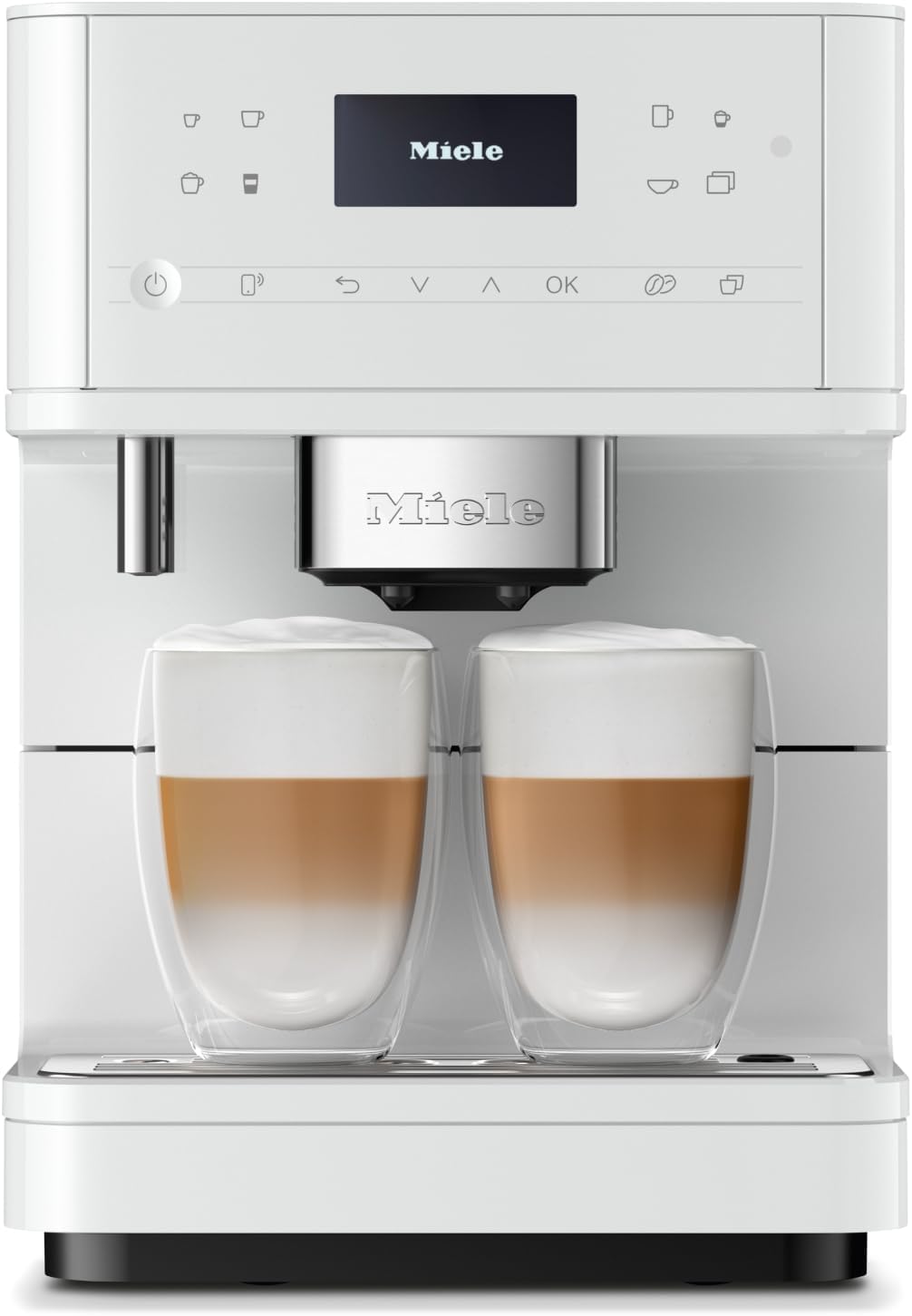
Best hands-off bean-comparison rig: Philips 4400 Series
Super-automatics aren’t the usual data-nerd pick, but the Philips 4400 has a use case: blind sensory rounds across bean lots while the Philos is parked for filter or moka. It keeps brew temperature and water volume locked, so you can isolate bean variables when you’re not actively sweeping grind. Think of it as the control-condition machine in your home lab. Look at the Philips 4400 Series on Amazon.
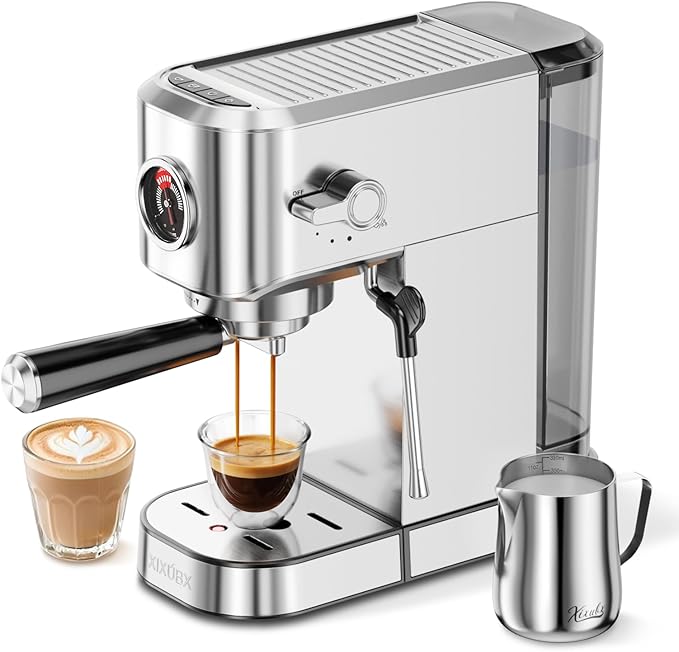
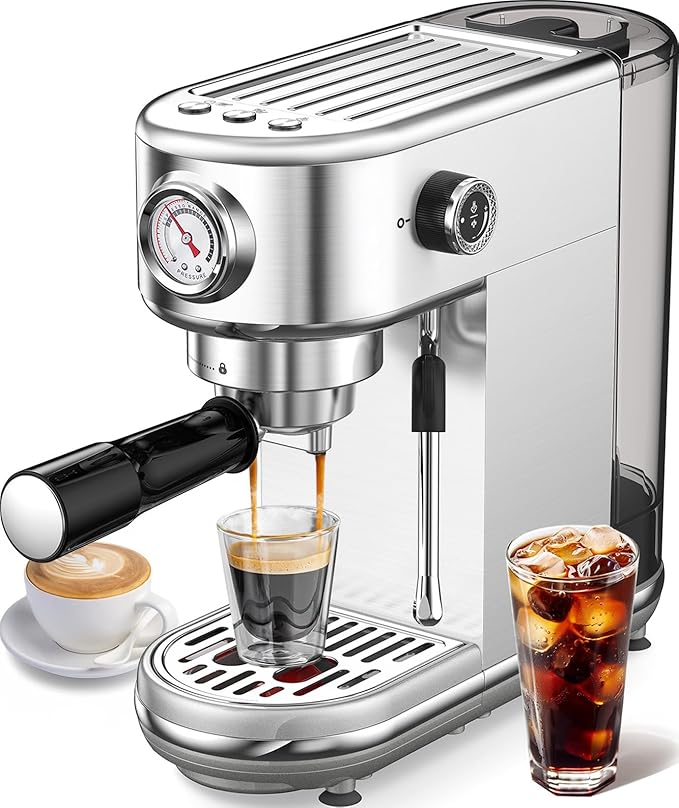
Best budget data-friendly entry: XIXUBX 20 Bar Compact
If you’re building a logging habit before committing to a prosumer machine, the XIXUBX 20 Bar gets you a stable enough platform for early experiments. It won’t deliver the temperature stability of the Breville, but for learning what “move the Philos one number finer” does to yield and time, it works as a starter rig. View the XIXUBX 20 Bar Compact on Amazon.
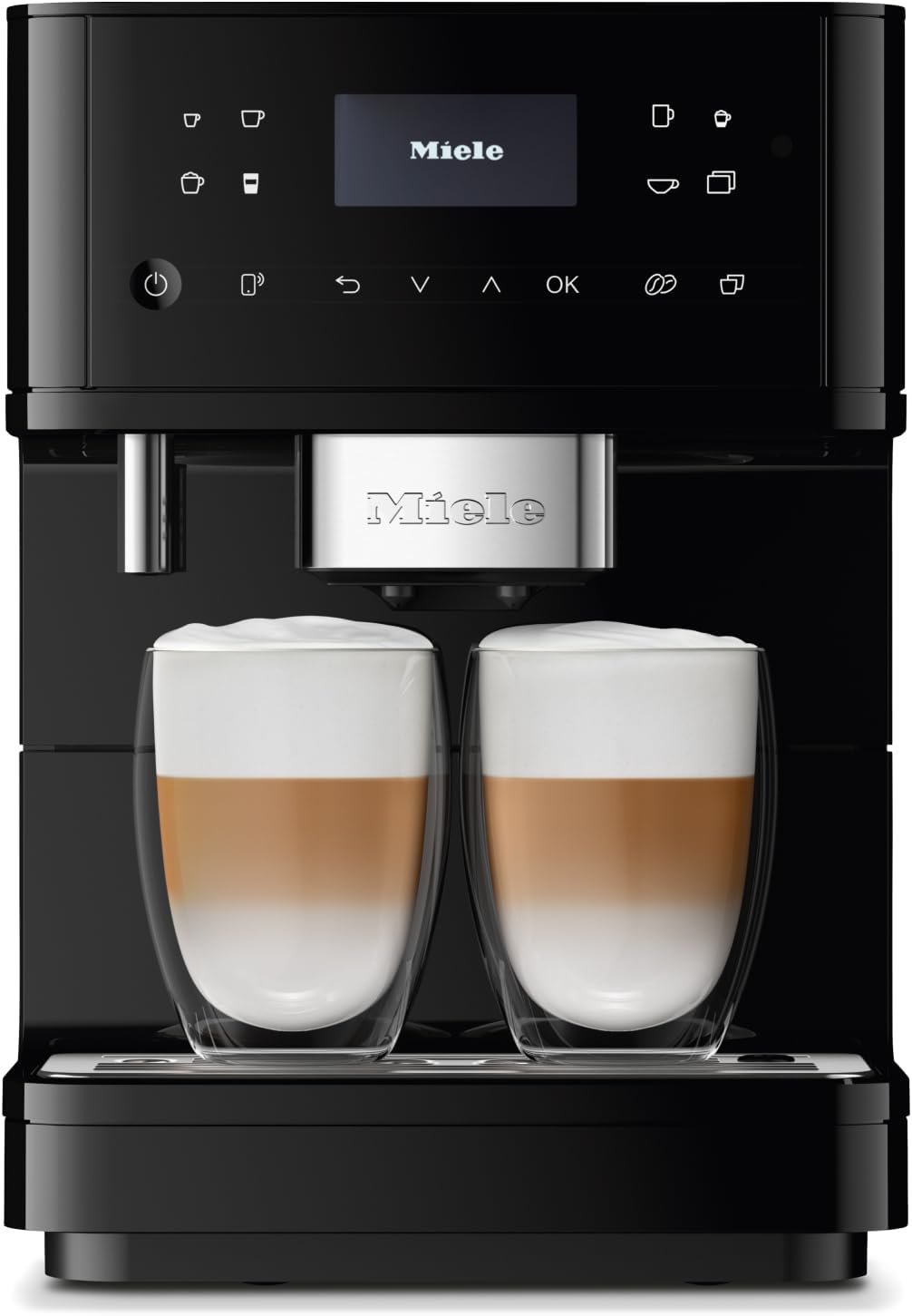
Comparison table: machines that pair well with a Mazzer Philos data workflow
| Machine | Portafilter | Temp stability for logging | On-machine data signal | Best for |
|---|---|---|---|---|
| Breville Barista Express BES870XL | 54mm, accepts bottomless | Strong (ThermoCoil) | Pressure gauge | Grind sweeps with visual channeling feedback |
| Ninja Luxe Cafe Premier 3-in-1 | Proprietary, assisted tamp | Strong | On-screen shot guidance | Reducing puck-prep noise in your dataset |
| Philips 4400 Series | N/A (super-auto) | Very stable, fixed parameters | App + display | Blind bean comparisons; control runs |
| XIXUBX 20 Bar Compact | Compact portafilter | Moderate | Pressure gauge | Beginner logging habit on a budget |
A practical logging schema for the Mazzer Philos
Spreadsheets beat memory. The schema below has held up across hundreds of shots for the kind of Mazzer Philos for data tracking home baristas workflow that actually surfaces insight rather than noise. Each row is one shot. Columns:
- shot_id — monotonic integer
- date — ISO format
- bean_lot — roaster + roast date
- days_off_roast — integer
- dose_g — to 0.1g
- philos_setting — worm-gear number (e.g., 47.5)
- yield_g — to 0.1g
- time_s — from pump on to cutoff
- brew_ratio — calculated: yield_g / dose_g
- tds — if you have a refractometer
- ey_pct — calculated extraction yield
- sensory_score — 0–10 for body, sweetness, acidity
- notes — channeling, gusher, blonding point
Charting ey_pct on the y-axis against philos_setting on the x-axis, grouped by bean_lot, gives you the curve you actually care about. You will almost always see a narrow plateau where extraction sits between 19% and 21%—that’s your dial-in target for the next bag of that bean, and you got there in roughly six shots instead of twenty.
Controlling for the variables Philos can’t fix
Even a stepless worm-gear grinder won’t save your data if everything else drifts. Pay attention to:
- Dose tolerance. Hold dose to ±0.1g. A 0.3g swing on an 18g dose changes brew ratio enough to wash out a real grind-setting effect.
- Distribution. Use a WDT tool every shot, not just “when it looks clumpy.” Inconsistent distribution introduces channeling that looks like a grind problem in your data.
- Retention. Single-dose and purge with a bellows or RDT. Carryover from the previous shot is invisible noise.
- Bean age. Tag every row with days off roast. Yield-by-grind curves shift visibly between day 7 and day 21.
- Water. Hard water and soft water extract differently. If you switch, mark the row.
If you want a deeper dive on puck prep, see our guide to WDT distribution tools for home baristas, and for refractometer workflow our piece on refractometer TDS measurement for home espresso walks through the math.
What the data usually tells you
After a few weeks of logging with the Philos, the patterns that consistently emerge for home baristas:
- Each new bag has a “home” grind setting within a 3–5 unit window on the worm-gear scale.
- Yield-by-grind curves are steeper for light roasts and flatter for medium–dark, which is why light roasts feel “picky.”
- Shot time alone is a poor predictor of extraction yield; ratio and grind setting together explain far more variance.
- Sensory scores correlate with EY only inside a narrow band—outside it, you’re just tasting defects.
This is the payoff for treating grind setting as a logged number rather than a feeling. If you want to extend the same approach to your machine, our breakdown of espresso machines with built-in scales in 2026 covers which ones export shot data automatically.
Other machines you might consider
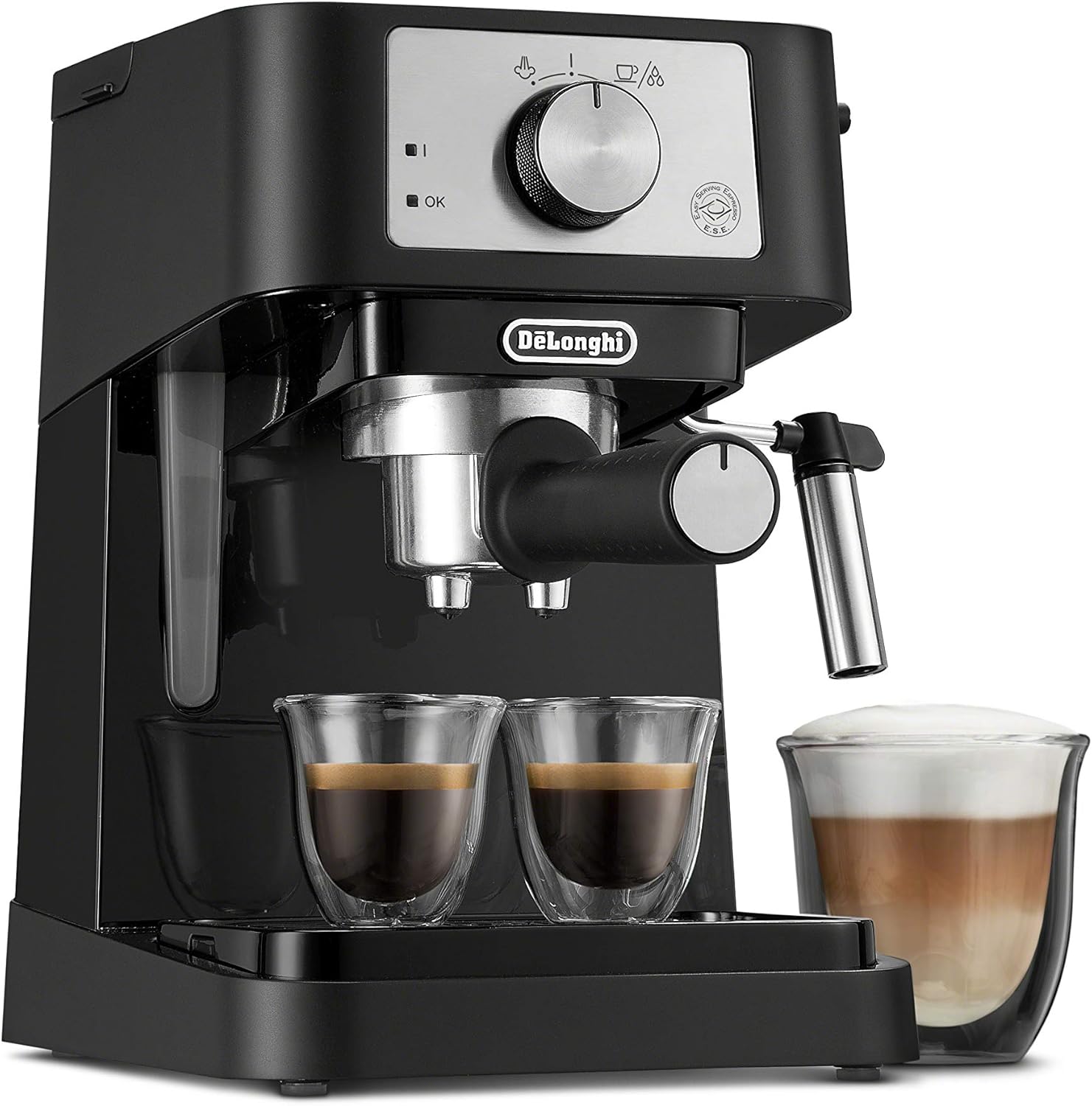
atatix Espresso Machine with Milk Frother, 20 Bar Pressure
For households where one person is logging shots and another just wants a quick cappuccino, the atatix 20 Bar covers the milk-drinks side without disrupting your data setup. It keeps the data-nerd machine free for controlled runs. See the atatix Espresso Machine on Amazon.
Frequently Asked Questions
How precise is the Mazzer Philos grind adjustment for logging?
The Philos uses a stepless worm gear with a printed numerical reference, typically read to roughly half a unit. That gives you effectively continuous resolution—finer than any stepped grinder in its class—which is what you want when you’re plotting yield against grind position.
Can I use the Mazzer Philos for data tracking home baristas with a super-automatic machine?
You can, but you lose most of the value. Super-autos lock dose, temperature, and brew ratio internally, so the only variable left is the bean. Use the Philos with a semi-automatic or manual machine where you control yield by stopping the shot at a scale weight.
What’s a good starter logging spreadsheet for shot yield by grind setting?
Any sheet with the columns listed above works: shot_id, date, bean_lot, dose_g, philos_setting, yield_g, time_s, brew_ratio, and notes. Add TDS and EY columns when you get a refractometer. Beanconqueror and Filtru also export CSVs if you prefer a mobile-first workflow.
Do I need a refractometer to get value from logging Philos data?
No. Even without TDS, plotting sensory score against grind setting and brew ratio surfaces the dial-in window faster than guessing. A refractometer mostly converts that window into a calibrated EY number you can compare across beans.
How often should I recalibrate my grind setting on a new bag?
Pull one reference shot at your last bag’s home setting, then move two units coarser and two units finer. Three data points usually bracket the new bean’s window inside the first morning. After that, expect minor drift over the next 10–14 days as the beans degas.
Does single-dosing on the Philos actually reduce retention enough to matter for data?
Yes. Hopper-fed grinders carry over grams of stale grounds at a different grind setting from your last session, which contaminates the first shot of every experiment. Single-dosing with a bellows purge means each logged shot reflects only the bean and setting you actually entered.
Is the Philos overkill if I only pull two shots a day?
For pure volume, yes. For data quality at low volume, no—the per-shot consistency means your two shots a day are comparable across weeks, which is exactly the regime where logging pays off. If you pull more than ten a day, look at on-demand grinders with timed dosing instead.
Key Takeaways
- Choosing the right Mazzer Philos for data tracking home baristas means matching capacity and output ports to your actual devices
- Always check actual watt-hours (Wh), not just watts — runtime depends on Wh, not peak output
- Also covers: Mazzer Philos single dose review
- Also covers: Philos grind setting repeatability
- Also covers: Mazzer Philos vs Niche Zero
- Compare price-per-Wh across models to find the best value for your budget