If you've been pulling shots on a Breville Bambino Plus and you're staring at the Lelit Bianca V3 wondering whether you can actually handle a paddle-controlled flow profiling machine in 2026, the short answer is yes — with caveats. This lelit bianca v3 flow profiling beginner bambino plus upgrade jump is one of the most rewarding in home espresso, but also one of the steepest. The Bianca V3 hands you manual flow control via its iconic paddle, an E61 group, dual boilers, PID temperature control, and saturated brew temperature stability — none of which the Bambino Plus offers. You'll move from fixed 9-bar shots to crafting your own pressure curves in real time.
Why the Bambino Plus tops out for flow profiling enthusiasts
The Bambino Plus is a fantastic first machine. It heats fast, pulls drinkable espresso with a decent grinder, and the auto-milk wand carries beginners through the cappuccino learning curve quickly. But it's a fixed-pressure thermoblock machine: you cannot vary brew pressure during a shot, you cannot extend pre-infusion beyond its brief automatic soak, and the small group head has limited thermal mass. For anyone who has watched Lance Hedrick videos, read about declining pressure profiles for light Nordic roasts, or wants to slow the bloom on naturally processed Ethiopians, the Bambino simply doesn't have the hardware. You've hit the ceiling, and no firmware update is coming to break through it.
What the Lelit Bianca V3 actually brings to the bench
The Bianca V3 in 2026 sits in a unique spot. It's a prosumer dual-boiler E61 machine with a paddle valve mounted directly on the group head. As you slide the paddle, you mechanically restrict water flow through a needle valve — which translates directly into pressure on the puck. You also get a programmable PID with brew profiles, configurable low-flow pre-infusion, a rotary pump (with optional plumb-in), and a stainless body that disassembles cleanly for service. None of this is automated. You decide when to taper. You decide whether to run an 8-second 2-bar bloom or a 15-second 4-bar ramp. The Bianca rewards intentionality and punishes autopilot habits.
The realistic learning curve coming from a Bambino
Three things change immediately. First, warmup: instead of 30 seconds, you're looking at 25 to 35 minutes before the group is fully thermally stable. Second, grinder demands escalate. A Niche Zero, DF64v, or Eureka Mignon Specialita is the absolute minimum — flow profiling magnifies grind inconsistency, and no paddle motion will save a coarse, channeling puck. Third, distribution and tamping become non-negotiable. The Bambino's pressurized portafilter forgives sloppy prep; the Bianca's naked portafilter and unpressurized basket do not. Plan to spend the first month re-learning fundamentals — WDT, distribution, leveled tamp — before you ever touch the paddle in anger.
Should you stop at an in-between machine first?
This is the most common question for the lelit bianca v3 flow profiling beginner bambino plus upgrade path. Some baristas suggest a mid-tier intermediate (Lelit Mara X, Profitec Go, Breville Dual Boiler) to learn temperature surfing and unpressurized basket prep before paying for a paddle machine. Others argue that if you already know you want flow profiling, the intermediate purchase is wasted money. The honest answer in 2026: if you can afford the Bianca and have the counter space and time, go straight to it. If budget is tight, a used Barista Express remains a useful waystation because it forces you to confront grinder calibration and the jump from pressurized to unpressurized baskets.
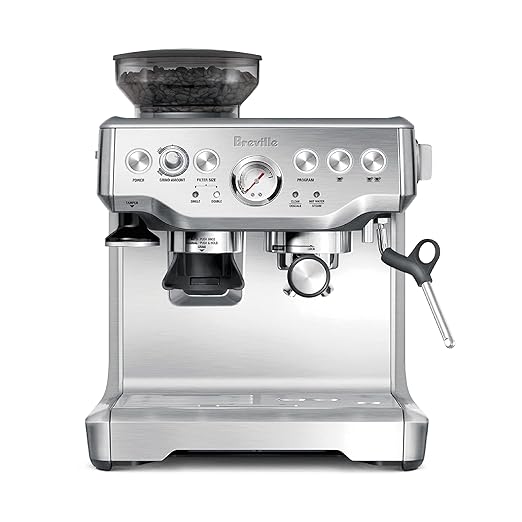
Breville Barista Express BES870XL — the budget waystation
The Barista Express isn't a flow profiling machine. It's a single-boiler thermocoil with a built-in conical burr grinder, and that's exactly why it can teach you. You'll learn dose, grind size, tamp pressure, and shot timing on a forgiving platform — skills that translate directly to the Bianca later. Treat it as a six-month rental of barista fundamentals before stepping up. Buy unpressurized baskets on day one, retire the built-in grinder for single-origin light roasts once you progress, and you'll reach the Bianca knowing exactly what a 1:2 ratio at 9 bar should taste like. Available here: Breville Barista Express BES870XL on Amazon.
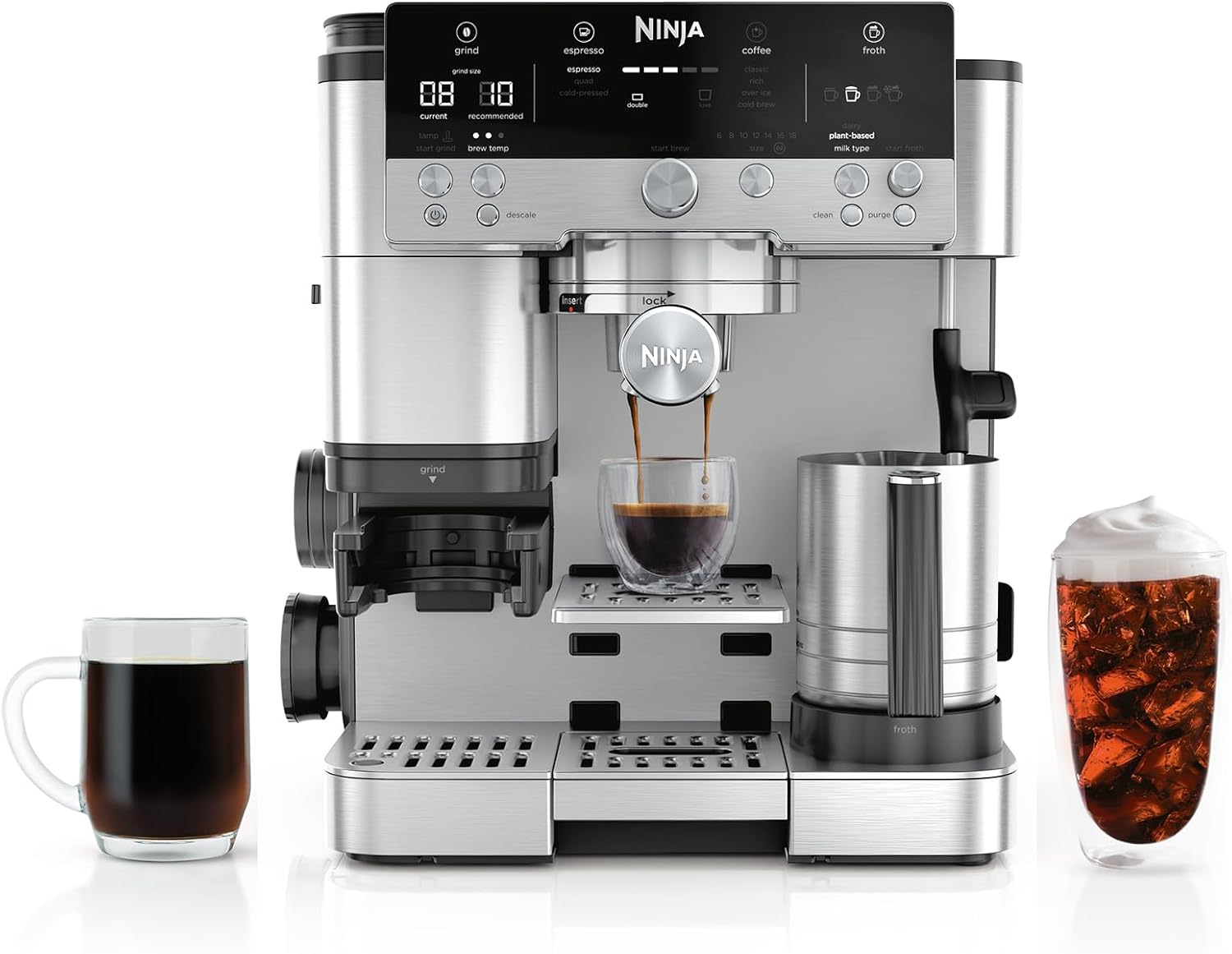
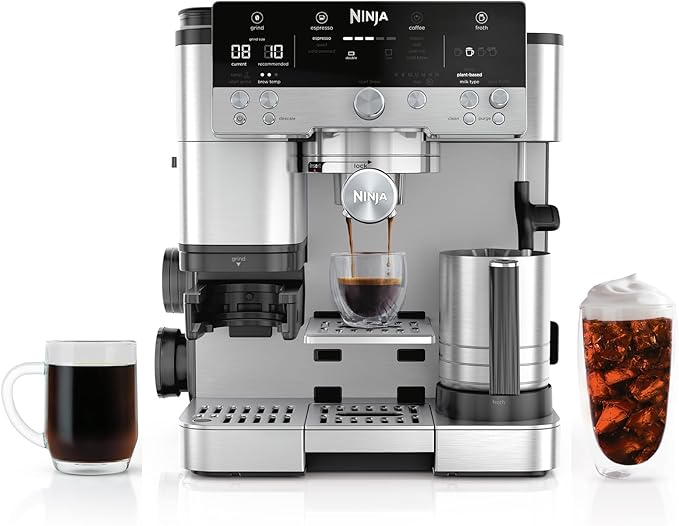
Ninja Luxe Cafe Premier — the closest thing to profiling under $700
If you specifically want a taste of pressure-profiling concepts without committing to the Bianca, the Ninja Luxe Cafe Premier offers a barista-assist mode with adjustable shot pressure profiles. It is not paddle control, and the espresso ceiling is well below a true E61, but the menu-driven profiles introduce the vocabulary of bloom, ramp, and decline. For a Bambino owner who isn't sure whether they want true manual control or whether automated profiling is enough, it's a reasonable preview before committing $3000+. Check current price: Ninja Luxe Cafe Premier on Amazon.
Comparison: where each machine sits on the flow profiling ladder
| Machine | Flow control | Boilers | Beginner-friendly | Best for |
|---|---|---|---|---|
| Breville Bambino Plus | None | Thermoblock | Excellent | First espresso machine |
| Breville Barista Express | None | Thermocoil | Very good | Learning fundamentals with built-in grinder |
| Ninja Luxe Cafe Premier | Pre-set profiles | Thermoblock | Good | Sampling automated profiling |
| Lelit Bianca V3 | Manual paddle | Dual boiler E61 | Demanding | Hands-on flow profiling |
The hidden costs nobody mentions
Budget for more than the machine. A real flow profiling workflow needs a refractometer (a VST runs about $400, or skip it and dial by taste), an Acaia or Felicita scale ($150-250), a WDT tool ($30), a leveling tamper ($60-150), and a decent puck screen. You'll also want bottomless portafilters for diagnosing channeling — without a naked PF, paddle work is mostly guesswork. The total ecosystem needed to actually use the Bianca's capabilities runs roughly $500-800 on top of the machine itself. Skip the accessories and you'll own a $3000 lever you can't read, which is the most expensive way to make worse espresso than your old Bambino.
Grinder pairings that make flow profiling visible
This is non-negotiable. Flow profiling on a $300 conical grinder is like wearing the wrong prescription — you'll see something, but not what's there. For the Bianca in 2026, entry-level pairings include the DF64v, Eureka Mignon Specialita, or Niche Zero/Niche Duo. Step-up budgets land on the Lagom P64, Option-O P100, or a used Mahlkonig EK43. The Bianca's paddle precision is designed to expose grind clarity; a retention-heavy or stepped grinder will erase your work between shots. See our grinder pairings for flow profiling guide for current 2026 picks.
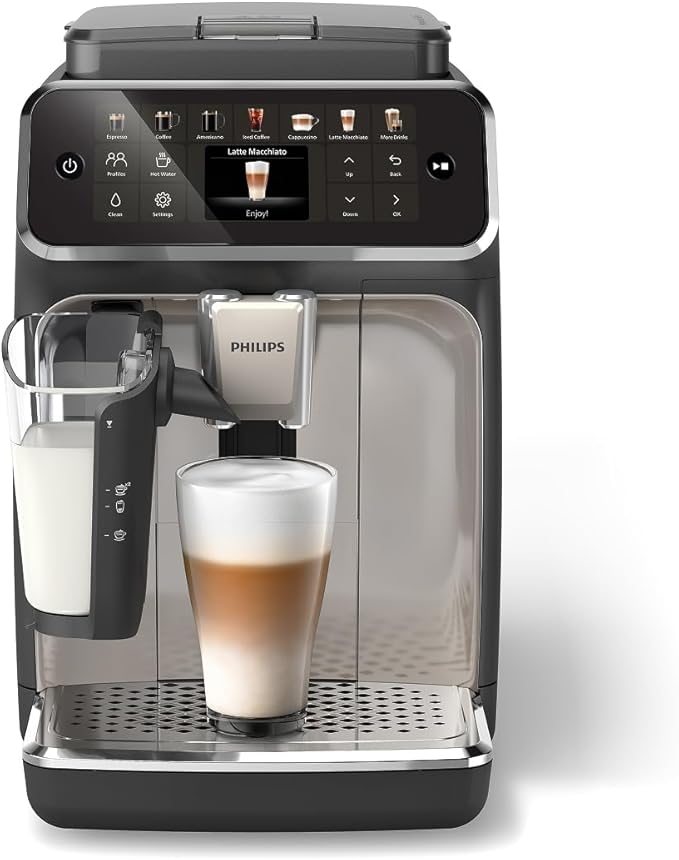
What about super-automatics like the Philips 4400?
Super-automatics belong to a different conversation. They grind, dose, tamp, brew, and clean in one cycle — perfect for a household that wants café-grade milk drinks with zero ritual. They have no flow profiling, no manual control, and no path forward for a barista who wants to actually shape shots. If your house is split between you (wanting Bianca) and a partner (wanting one-button cappuccinos), consider keeping a super-automatic as the family workhorse and dedicating the Bianca to your bench. The Philips 4400 covers that use case well: Philips 4400 Series on Amazon.
Your first 90 days with the Bianca: a practical roadmap
Week 1-2: ignore the paddle entirely. Pull straight 9-bar shots, dial in your grinder, learn the basket and your beans. Week 3-4: try a 4-second low-flow pre-infusion before opening to 9 bar. One variable at a time. Week 5-8: add declining-pressure tails on lighter roasts. Pull side-by-side shots with the same beans and grind, only changing the paddle motion after second 20. Taste them blind with notes. Week 9-12: experiment with full bloom-ramp-taper profiles on one hero bean you know cold. Resist changing beans every session — flow profiling teaches nothing if your variables aren't controlled.
When to skip the Bianca and go elsewhere
Don't buy the Bianca if you primarily drink milk drinks. The paddle workflow and naked basket are built around straight espresso and pour-over-style ratios. For milk-heavy households, a Lelit Elizabeth or Profitec Pro 400 is cheaper and equally capable at lattes. Don't buy the Bianca if you want app-driven flow profiles — Decent's DE1 or the Meticulous Espresso are designed for that. And don't buy the Bianca if you haven't first mastered grind, distribution, and tamp on a simpler machine. Read our Bambino Plus upgrade paths overview for a fuller decision tree before pulling the trigger on any lelit bianca v3 flow profiling beginner bambino plus upgrade.
Frequently Asked Questions
Is the Lelit Bianca V3 worth it for a complete espresso beginner?
Generally no. The Bianca rewards skill you've already built. A complete beginner should start with a Bambino Plus, Barista Express, or Lelit Elizabeth, learn fundamentals for six to twelve months, then upgrade. Going straight to a Bianca means $3000+ of hardware sitting underutilized while you relearn things a $500 machine teaches just as well.
How long does it take to learn flow profiling coming from a Bambino Plus?
Plan three to six months of dedicated practice before flow profiling produces consistently better shots than a flat 9-bar pull. The first month is just relearning fundamentals on an unpressurized basket. Real paddle control comes only after you can pull a clean, channel-free baseline shot in your sleep on a fixed-pressure profile.
What grinder pairs best with the Lelit Bianca V3 for flow profiling beginners?
For 2026, the Niche Zero and DF64v are the most common entry points under $700. Stepping up, look at the Eureka Mignon Specialita, Option-O Lagom Mini, or a used Mazzer Mini E. Avoid Breville's built-in grinders for flow profiling work — retention and stepped adjustments will fight you on every micro-dial.
Can I flow profile on a Breville Bambino Plus at all?
Not meaningfully. The Bambino has a fixed pump curve and a brief automatic pre-infusion, with no user control over either. You can vary grind and dose, but you cannot shape pressure or flow during the shot. That hardware limitation is exactly why people upgrade in the first place.
Does the Bianca V3 do milk drinks as well as the Bambino Plus?
Better, but harder. The Bianca's steam boiler produces dry, powerful steam that rivals café equipment, but there's no auto-frothing — you control the wand. Expect a 1-2 week relearning curve for latte art. The reward is true microfoam instead of the Bambino's auto-textured result.
Is the Decent DE1 a better flow profiling machine than the Bianca V3?
Different philosophies. The DE1 is software-driven with logged shots, app profiles, and replayable curves — ideal for data-minded baristas. The Bianca is mechanical, intuitive, and tactile — closer to a manual lever. Most home baristas who try both keep the Bianca because the paddle feels like an instrument rather than a touchscreen.
What pre-infusion settings should a Bianca beginner start with?
Start at 3 bar for 6-8 seconds with the paddle, then open to full 9 bar over 2 seconds. Time the total shot from when pressure ramps. Adjust pre-infusion length first, peak pressure second, and resist changing more than one variable per session. Our flow profiling basics guide has shot-by-shot adjustment templates worth printing.
Key Takeaways
- Choosing the right lelit bianca v3 flow profiling beginner bambino plus upgrade means matching capacity and output ports to your actual devices
- Always check actual watt-hours (Wh), not just watts — runtime depends on Wh, not peak output
- Also covers: lelit bianca paddle for beginners
- Also covers: bianca v3 flow profile basics
- Also covers: lelit bianca upgrade from bambino
- Compare price-per-Wh across models to find the best value for your budget