To purge the steam wand on a Gaggia Classic Pro without burning yourself, swing the wand fully over the drip tray, drape a thick folded microfiber towel around the tip (never your bare hand), point the nozzle straight down into the tray, and crack the steam knob open slowly for one to two seconds until the initial spit of hot water clears and you see a steady dry steam plume. Close the knob, wait three seconds, then wipe. This gaggia classic pro steam wand purge safety sequence prevents the violent first-second splatter that scalds most home baristas.
Below is the full routine, the gear that helps, and the mistakes that send people to the sink with red fingers.
Why the First Second of a Purge Is Dangerous
The Gaggia Classic Pro uses a single boiler that sits at roughly 250°F (121°C) when the steam light is on. Between shots, condensed water pools inside the steam wand and the boiler crown. When you open the knob, that trapped water flashes to steam and ejects as a high-velocity wet slug before dry steam takes over. That slug is what burns you — it's hotter than boiling, travels in unpredictable directions if the wand is angled wrong, and can ricochet off a shallow milk pitcher straight onto your forearm.
Practicing proper gaggia classic pro steam wand purge safety means treating that first second as the hazard, not the steaming itself. Every other phase — the long, hissing dry-steam phase — is comparatively tame.
The 7-Step Safe Purge Routine
Step 1: Position the wand over the drip tray, not the counter
Swing the wand all the way to the right (or left, depending on your orientation) so the tip sits directly above the chrome drip tray grate. Never purge over an empty pitcher on the counter — the splash radius is wider than you think.
Step 2: Angle the nozzle 90° straight down
A vertical nozzle directs the initial water slug into the tray, not sideways toward your hand or the machine's side panel. If your tip is angled at 45°, the slug arcs outward.
Step 3: Drape a folded microfiber over the wand
Use a clean, dry microfiber folded into quarters. Lay it over the wand so the tip is shrouded but not blocked. The towel absorbs splatter and lets you grip the wand later without contact burns. Never wrap your fingers around bare stainless — the Classic Pro wand reaches 200°F+ within 30 seconds of the steam light turning on.
Step 4: Crack the knob a quarter turn — slowly
The Gaggia steam knob is a needle valve. Open it gradually over about one second. A full-blast yank releases the trapped water as a single violent burst; a gradual crack bleeds it out as a manageable stream.
Step 5: Wait for the "hiss change"
You'll hear a gurgly, spitty sound for one to two seconds, then it shifts to a clean high-pitched hiss. That audio shift is your signal that wet water has cleared and you're now on dry steam. Many burns happen because the user closes the valve too early, leaves water in the wand, and gets a delayed eruption next time.
Step 6: Close the knob firmly
Close fully — the Classic Pro knob seats with a definite stop. A partially closed valve drips scalding water onto the tray and rusts the chrome.
Step 7: Wipe with the microfiber while it's still hot
Milk residue carbonizes within minutes on a hot wand. Wipe immediately after closing the knob, keeping the towel between your fingers and the metal. Then purge a second short burst (one second) to clear any milk pulled into the tip by the negative pressure when you closed the valve.
Gear That Makes Safe Purging Easier
You don't need much, but three items dramatically reduce burn risk: a thick microfiber dedicated to the wand (never the same one you use for the group), a tall narrow milk pitcher (so the wand tip is deep below the rim during steaming), and a silicone steam wand sleeve if you frequently train new users on your machine.
If You're Shopping for a Safer or Easier-to-Purge Machine
The Gaggia Classic Pro is beloved for a reason, but its manual steam wand has a learning curve. If you or someone in your household keeps getting burned despite following the routine above, a machine with an auto-purge cycle or a cool-touch wand may be a better fit. Below are the realistic alternatives at common price points. See our related best espresso machines under $1,000 in 2026 roundup for a wider field.
Comparison: Steam Wand Safety Across Popular Home Machines
| Machine | Wand Type | Auto-Purge? | Burn Risk for Beginners |
|---|---|---|---|
| Gaggia Classic Pro | Manual, commercial-style | No | Moderate — requires the routine above |
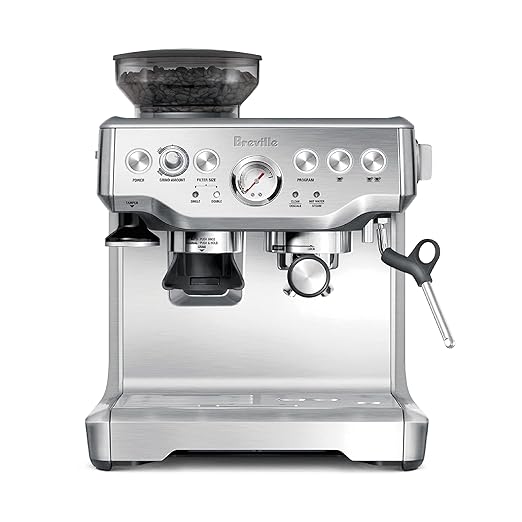
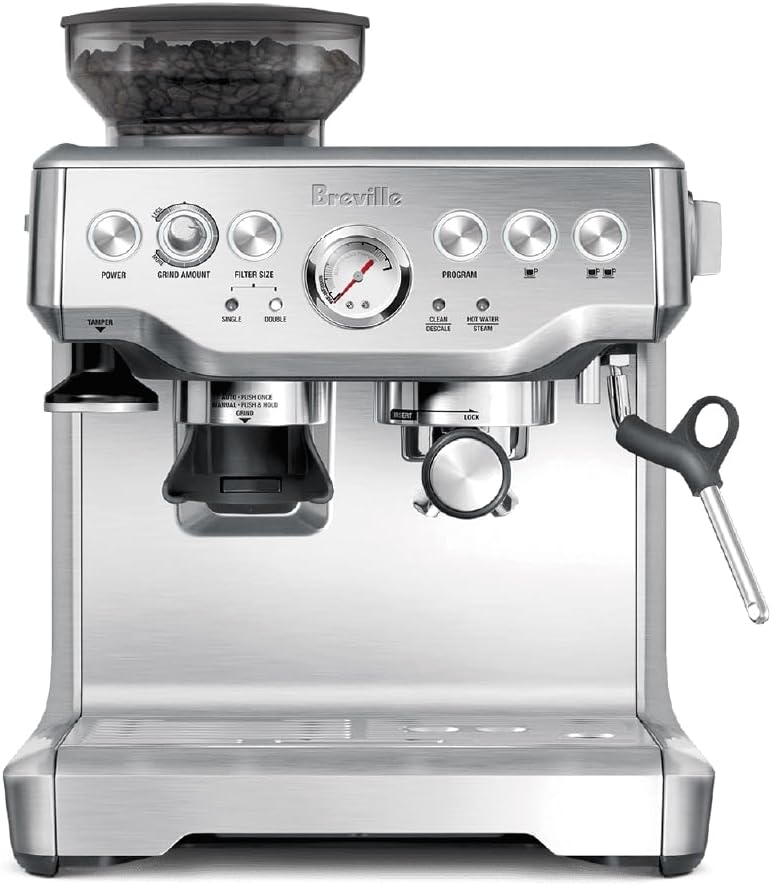
| Breville Barista Express BES870XL | Manual, 360° swivel | No, but cool-touch sleeve | Low — insulated sleeve protects hand |
| Ninja Luxe Cafe Premier | Semi-automatic with assist | Yes, after milk mode | Very low |
| Philips 4400 Series | Auto frother, no traditional wand | N/A — sealed system | Minimal |
Breville Barista Express BES870XL — Best for Manual-Steam Lovers Who Want a Safety Margin
If you like the hands-on ritual of the Gaggia but want a wand that doesn't blister your fingers when you forget the towel, the Breville Barista Express is the standard recommendation. Its steam wand has an insulating sleeve over the lower two inches, so the section you actually grip stays comfortably warm rather than scalding. Purging is the same vent-into-tray motion, but the consequences of a fumble are dramatically smaller. It also has an onboard grinder, which removes one more variable from the morning. Check the Breville Barista Express on Amazon.
Ninja Luxe Cafe Premier — Best Auto-Purge Workflow
The Ninja Luxe Cafe Premier runs a short automated purge after each milk-texturing cycle, blowing residual milk and condensate out of the wand without your hand near it. For households where multiple people of varying skill use the machine, this is the lowest-burn-risk option that still produces real microfoam. The 3-in-1 format also handles cold brew and drip, which is a nice bonus if you don't pull espresso every morning. See the Ninja Luxe Cafe Premier on Amazon.
Philips 4400 Series — Best No-Wand Option
If you've decided manual steam isn't worth the burn risk — especially if kids are in the kitchen — a fully automatic with a sealed milk carafe eliminates the hazard entirely. The Philips 4400 draws milk from a refrigerated carafe through an internal frother, so there's no open wand to purge and no scalding metal to grip. Texture isn't quite at Gaggia-with-a-good-tip level, but it's surprisingly close for cappuccinos and flat whites. View the Philips 4400 on Amazon.
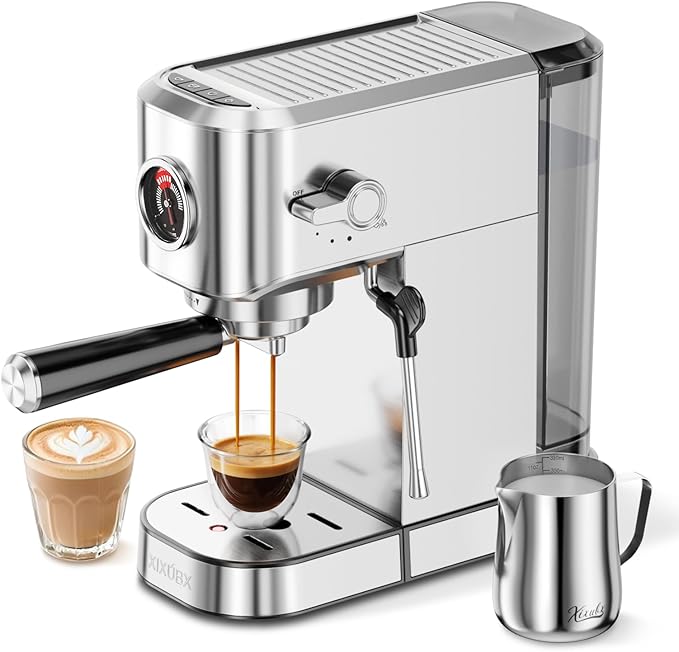
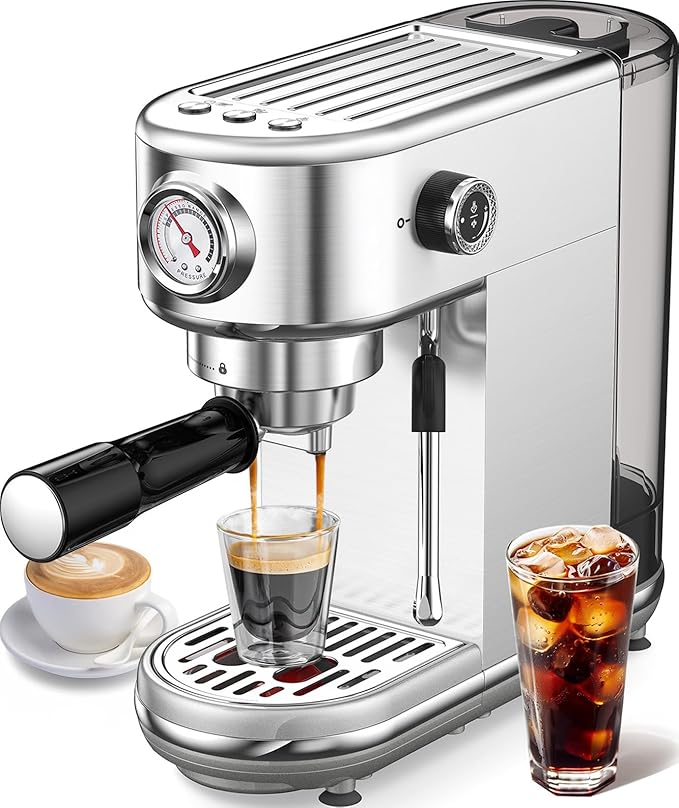
Compact Budget Pick: XIXUBX 20 Bar Stainless Steel
For a small kitchen or a dorm, the XIXUBX 20 Bar compact unit gives you a traditional steam wand at entry-level pricing. The wand is shorter than the Gaggia's, which actually reduces splash distance, though you'll still want to follow the towel-and-tray routine. Check the XIXUBX on Amazon.
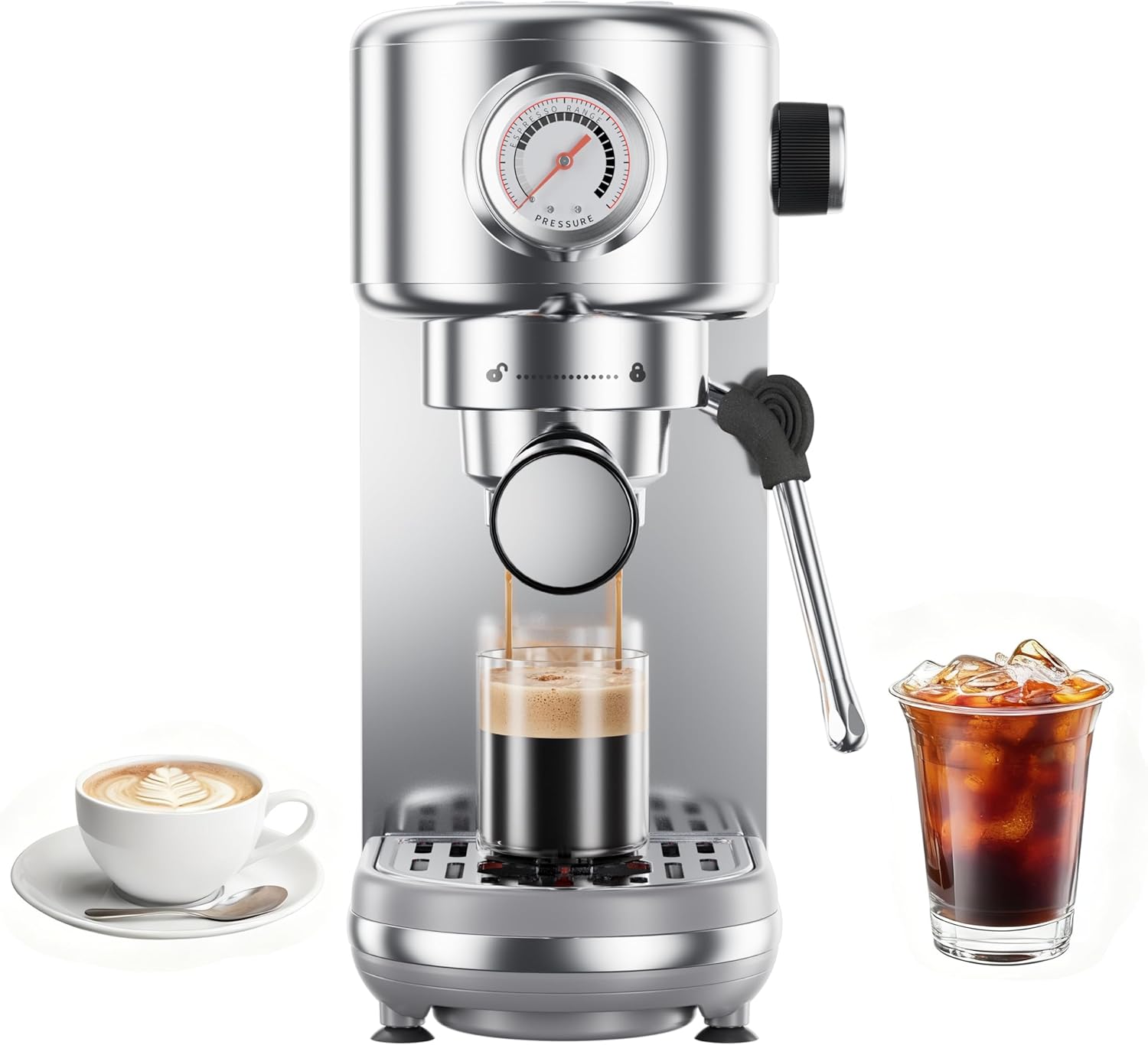
Honorable Mention: atatix 20 Bar with Milk Frother
The atatix is another budget manual-wand option worth a look if you specifically want to learn texturing technique without committing Gaggia money. The thermoblock heats up in roughly 40 seconds, and the smaller boiler means less trapped water to purge. See the atatix on Amazon.
Common Burn Scenarios — and How to Avoid Each
Scenario 1: Splash to the forearm from a shallow pitcher. Fix: use a 20oz pitcher minimum for steaming and keep your arm angled away during the initial purge.
Scenario 2: Contact burn on the wand body. Fix: never grip bare stainless after the steam light has been on for more than 20 seconds. The towel is non-negotiable.
Scenario 3: Delayed eruption on next use. If you closed the knob too early last time, water is still in the wand. Always do a full hiss-change purge, not a half-second tap.
Scenario 4: Steam knob seized open from milk residue. Run a descaling cycle quarterly and always wipe-then-purge. A sticky valve is a burn hazard because you'll yank harder to close it.
For deeper maintenance reading, see our Gaggia Classic Pro descaling guide and the companion piece on choosing a milk pitcher size for home espresso.
Frequently Asked Questions
How long should I purge the steam wand on a Gaggia Classic Pro before steaming milk?
One to two seconds, until you hear the audio shift from gurgly spitting to a clean high hiss. Anything shorter leaves water in the wand; anything longer wastes boiler temperature and you'll have to wait for the steam light again.
Do I need to purge the steam wand on the Gaggia Classic Pro after steaming as well?
Yes — a one-second purge after steaming clears any milk that got pulled into the tip when you closed the valve. Skipping this step is the single biggest cause of clogged tips and uneven steam pressure later.
Why does my Gaggia Classic Pro steam wand spit hot water for several seconds?
Either the steam light hasn't fully come up to temperature, or you have an unusually long wand path holding more condensate than normal. Wait until the light has been on for 30+ seconds before purging, and crack the knob more slowly.
Can I use a regular kitchen towel instead of a microfiber for the steam wand?
You can, but cotton terry holds residual moisture and can flash to steam against the wand. A microfiber dries faster and grips the wand without slipping. Dedicate one to the wand and wash it weekly.
Is it safe to purge the steam wand into a pitcher of water?
No — the violent first-second slug can splash boiling water out of the pitcher onto your hand. Always purge into the drip tray, never into a vessel you're holding.
What temperature does the Gaggia Classic Pro steam wand actually reach?
The wand surface reaches 200°F+ within 30 seconds of the steam light coming on, and the steam itself exits around 250°F. That's well above the threshold for second-degree burns on contact, which is why the towel grip matters so much.
Should I purge the steam wand if I'm only pulling espresso and not steaming milk?
No. The steam circuit isn't pressurized during espresso extraction, so there's nothing to purge. Only purge when the steam switch has been engaged and the steam light is on.
Key Takeaways
- Choosing the right gaggia classic pro steam wand purge safety means matching capacity and output ports to your actual devices
- Always check actual watt-hours (Wh), not just watts — runtime depends on Wh, not peak output
- Also covers: gaggia classic pro purge steam
- Also covers: gaggia steam wand burn prevention
- Also covers: classic pro purge after milk
- Compare price-per-Wh across models to find the best value for your budget