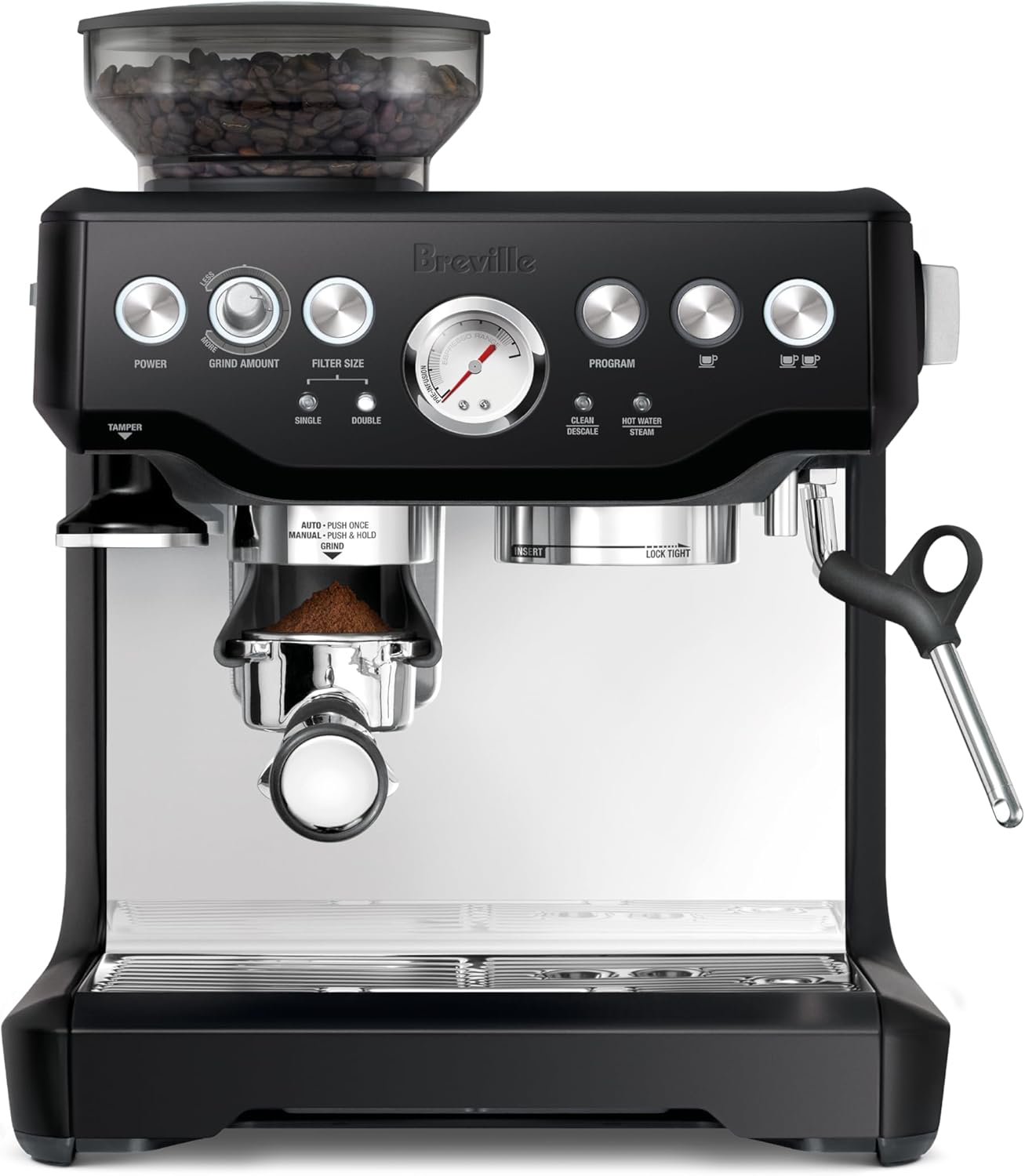
To convert Breville Barista Express to non-pressurized basket, you simply remove the stock dual-wall (pressurized) basket from your 54mm portafilter and drop in a single-wall basket of the same diameter. No drilling, no warranty-voiding mods, no soldering—just a $15 to $25 basket swap, a noticeably finer grind setting, and a more careful 18 to 19 gram dose. The payoff is the espresso the Breville Barista Express BES870XL is genuinely capable of producing: thicker, more structured crema, syrupy body, and the chocolatey complexity you paid prosumer money for. Below is the complete 2026 walkthrough, the exact parts to buy, dial-in steps, and what to do if shots run sour or choke entirely.
What a Non-Pressurized Basket Actually Changes
The Barista Express ships with two dual-wall (pressurized) filter baskets—a single and double. These have a hidden second floor with one tiny exit hole that artificially generates back-pressure regardless of grind quality. They are forgiving of pre-ground supermarket coffee, but they cap your ceiling: crema is foamy bubbles rather than micro-foam, body is thin, and you cannot taste origin character because extraction is not driven by puck resistance.
A single-wall (non-pressurized, or "unpressurized") basket has dozens of laser-drilled holes across a flat floor. Resistance now comes entirely from the coffee bed itself, which means grind size, distribution, and tamp matter—and so does your grinder. When people decide to convert Breville Barista Express to non-pressurized basket, they are essentially graduating from training wheels to the real bicycle.
What You Need Before You Start
You only need three things, and the Barista Express already includes most of them:
- A 54mm single-wall double basket (18g or 20g). IMS, Normcore, and Breville's own "The Precision" baskets all fit.
- A real tamper that contacts the basket wall (the stock plastic one is 53.5mm—usable, but a 54mm flat-base upgrade helps).
- Fresh beans—roasted within the last 3 weeks. Stale beans will not survive the move off pressurized baskets.
If your current grinder is the built-in conical burr on the BES870XL, you're fine to start. The internal grinder can reach espresso fineness, though you may want a dedicated grinder later. See our Barista Express grind size guide for the exact starting setting.
Step-by-Step: The Basket Swap
1. Unlock the stock basket
Pop the portafilter out of the group head. The pressurized basket is held in by a wire spring clip around its rim. Squeeze the sides of the basket and lift—if it resists, slide a butter knife between the basket lip and the portafilter wall and pry gently.
2. Inspect and clean
Wipe the inside of the portafilter cup. Old coffee oils accumulate under the basket and will throw off taste. A toothbrush plus a drop of Cafiza solution gets it spotless.
3. Drop in the single-wall basket
The new basket clicks into the same spring clip. It should sit flush. If it rocks, you have the wrong diameter—standard Breville baskets are 54mm. Pressurized vs. non-pressurized makes no difference to the portafilter housing.
4. Re-zero your grind size
This is where most conversions fail. Pressurized baskets ran fine at grind setting 5–7. A single-wall basket needs roughly grind setting 1–3 on the BES870XL's internal grinder. Start at 3, dose 18g, tamp 30 lbs, and pull for a 1:2 ratio in 25–30 seconds.
5. Adjust by taste
Sour and fast = grind finer. Bitter and slow = grind coarser. Channeling (one jet of espresso shooting sideways) = improve puck prep with a WDT tool. Our WDT setup guide covers the cheap DIY version.
Comparison: Should You Convert, Upgrade, or Replace?
Before spending money on baskets, a tamper, and possibly a separate grinder, it's worth knowing where the Barista Express sits against current 2026 alternatives. If you'd otherwise spend $200+ on accessories, an upgrade may make more sense.
| Machine | Stock Basket Type | Built-in Grinder | Best For |
|---|---|---|---|
| Breville Barista Express BES870XL | Pressurized (convertible) | Yes, conical burr | Home barista wanting to learn real espresso |
| Ninja Luxe Cafe Premier | Hybrid (assisted) | Yes, with auto-dosing | Hands-off users who want guided shots |
| Philips 4400 Series | Sealed brew group (super-auto) | Yes, ceramic | One-button cappuccino, no learning curve |
| XIXUBX 20 Bar Compact | Pressurized only | No | Beginners, dorm rooms, low budget |
| atatix 20 Bar Espresso Machine | Pressurized only | No | Pre-ground espresso, milk drinks |
Product Picks for the Conversion (and the Honest Alternatives)
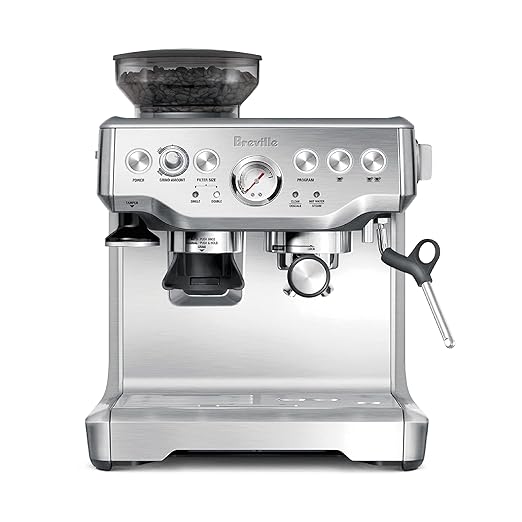
Breville Barista Express BES870XL — The Machine This Guide Is About
The BES870XL remains the most-converted prosumer machine in 2026 because it ships with a 54mm portafilter, a real 15-bar pump, a thermocoil heating system, and a built-in conical burr grinder—the same combination cafe staff trained on for a decade. The pressurized basket it ships with is a training wheel, not a limit; once you swap in a single-wall basket, the machine pulls shots comparable to setups twice its price. Check current pricing and basket-bundle deals on the Breville Barista Express BES870XL on Amazon.
Ninja Luxe Cafe Premier — If You Want Assisted Dialing Instead of DIY
The Ninja Luxe Cafe Premier 3-in-1 is the most credible direct alternative if you don't want to wrestle with a basket swap. It auto-doses, auto-tamps, and uses a guided dial-in screen, so the entire pressurized-vs-unpressurized question is hidden behind software. You give up some of the tactile learning that makes home espresso satisfying, but you also skip the channeling, the choked shots, and the wasted beans. Take a look at the Ninja Luxe Cafe Premier on Amazon.
Philips 4400 Series — When You'd Rather Press a Button
If reading this guide already feels like too much work, the Philips 4400 Series is the honest answer. It's a fully automatic bean-to-cup machine: no baskets to swap, no grind settings to dial, no tamper to buy. The trade-off is that it cannot ever produce the layered, syrupy espresso that a properly converted Barista Express can, because the sealed brew group is engineered around consistency, not ceiling. Best for milk-drink households. View the Philips 4400 Series on Amazon.
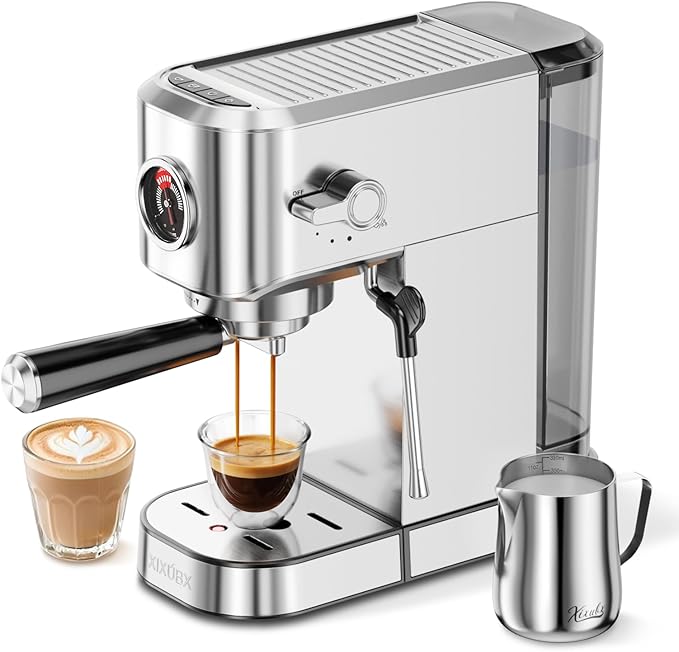
XIXUBX 20 Bar Compact Stainless Steel — Budget Backup Machine
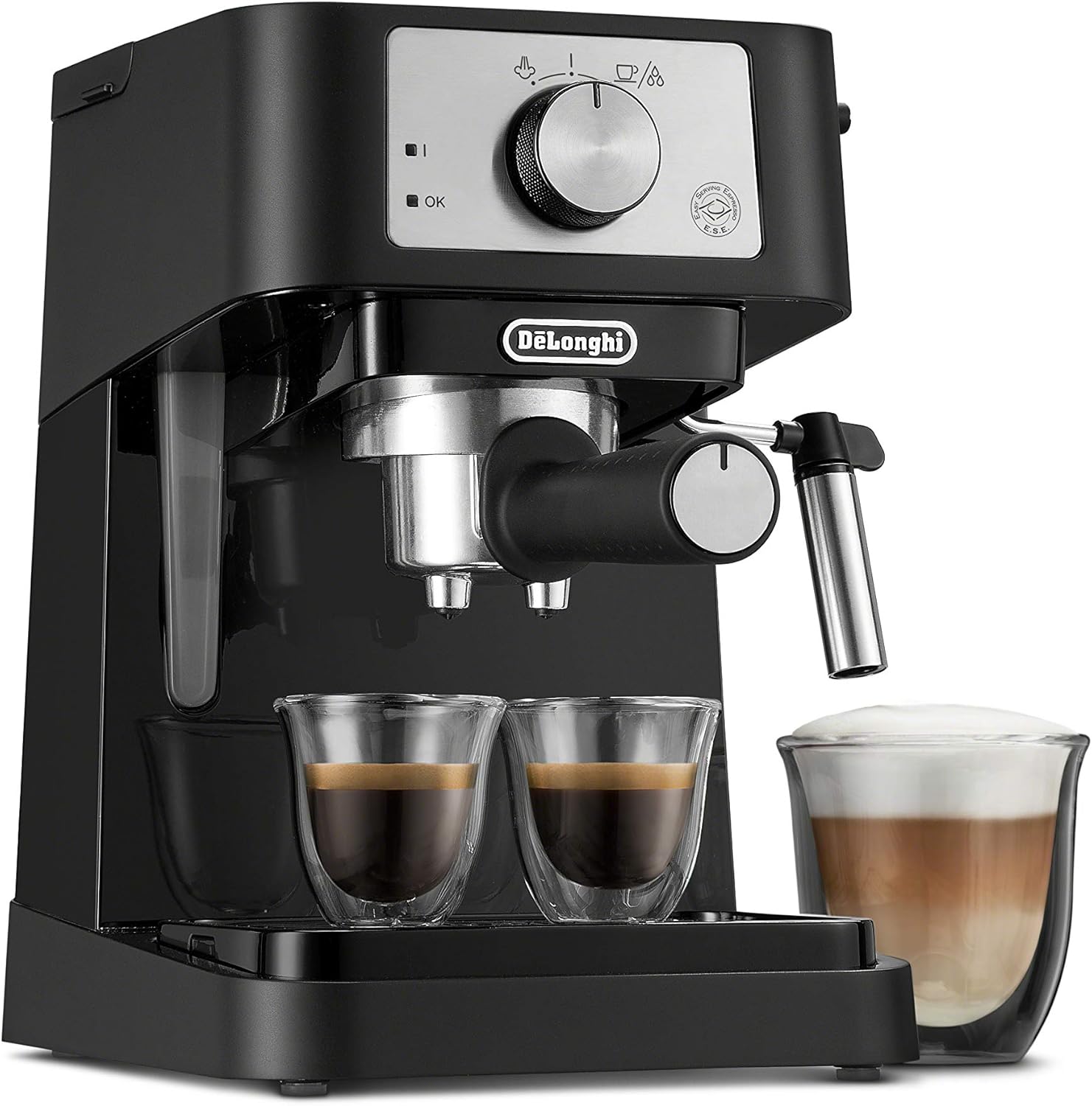
If your Barista Express is your only espresso machine and you want a cheap backup (or a counter machine for a small office) while you tinker with conversions, the XIXUBX 20 Bar is the lowest-stakes pick. It only accepts pressurized baskets, so don't expect to recreate the conversion here, but as a $100-class workhorse for milk drinks it holds up. See the XIXUBX 20 Bar Espresso Maker on Amazon.
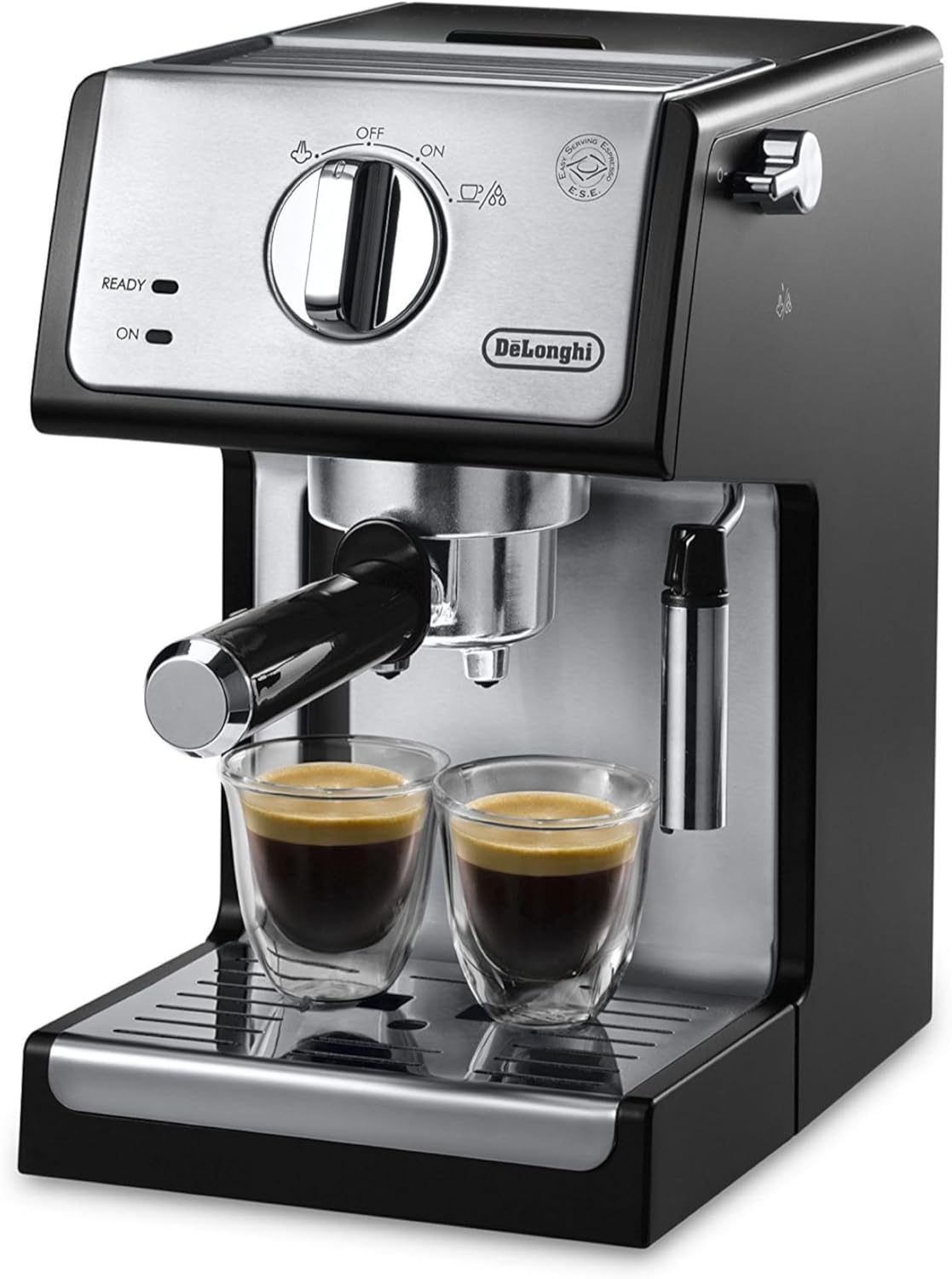
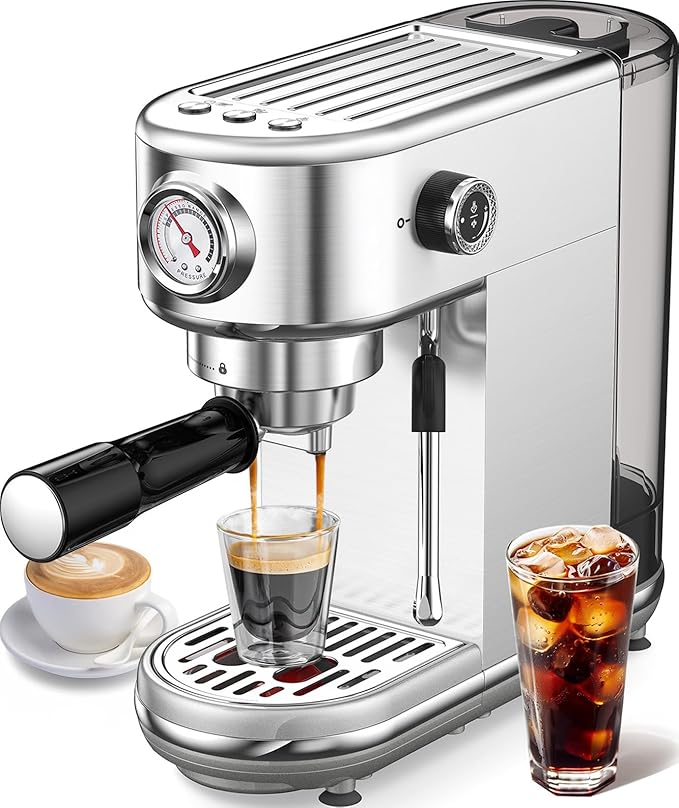
atatix 20 Bar Espresso Machine with Milk Frother — Pre-Ground Friendly
The atatix is purpose-built for pre-ground supermarket espresso and forgiving doses. Pressurized baskets are not removable, so it's not a candidate for conversion—mention it here only because we get asked whether it's a Barista Express alternative for tinkerers. It isn't, but it's a legitimate $80 espresso-and-cappuccino solution. Browse the atatix Espresso Machine on Amazon.
Dialing in the First Week
The week after you convert Breville Barista Express to non-pressurized basket is the messiest. Expect to waste at least 200g of beans. A few habits will compress the learning curve:
- Weigh everything. 18g in, 36g out, 27 seconds. Three numbers. A $15 scale pays for itself in a week.
- Pre-infuse manually. Hit the 2-cup button, then immediately tap it again to pause for 8 seconds. Resume. This evens out the puck.
- Don't touch two variables at once. If you change grind size and dose simultaneously, you'll never know what fixed (or broke) the shot.
- Keep beans within 3 weeks of roast. Older beans degas less and channel through single-wall baskets.
If you decide the built-in grinder isn't fine or consistent enough after two weeks, that's the normal next upgrade. Our Barista Express vs Bambino Plus comparison covers the case for separating the grinder from the machine entirely.
Frequently Asked Questions
Does converting to a non-pressurized basket void the Breville warranty?
No. Swapping baskets is a normal user operation—Breville sells single-wall baskets as accessories, and the portafilter is designed to accept either type. The warranty only voids if you modify the machine itself (rewiring, drilling the group head, replacing internal sensors).
What size basket fits the Barista Express portafilter?
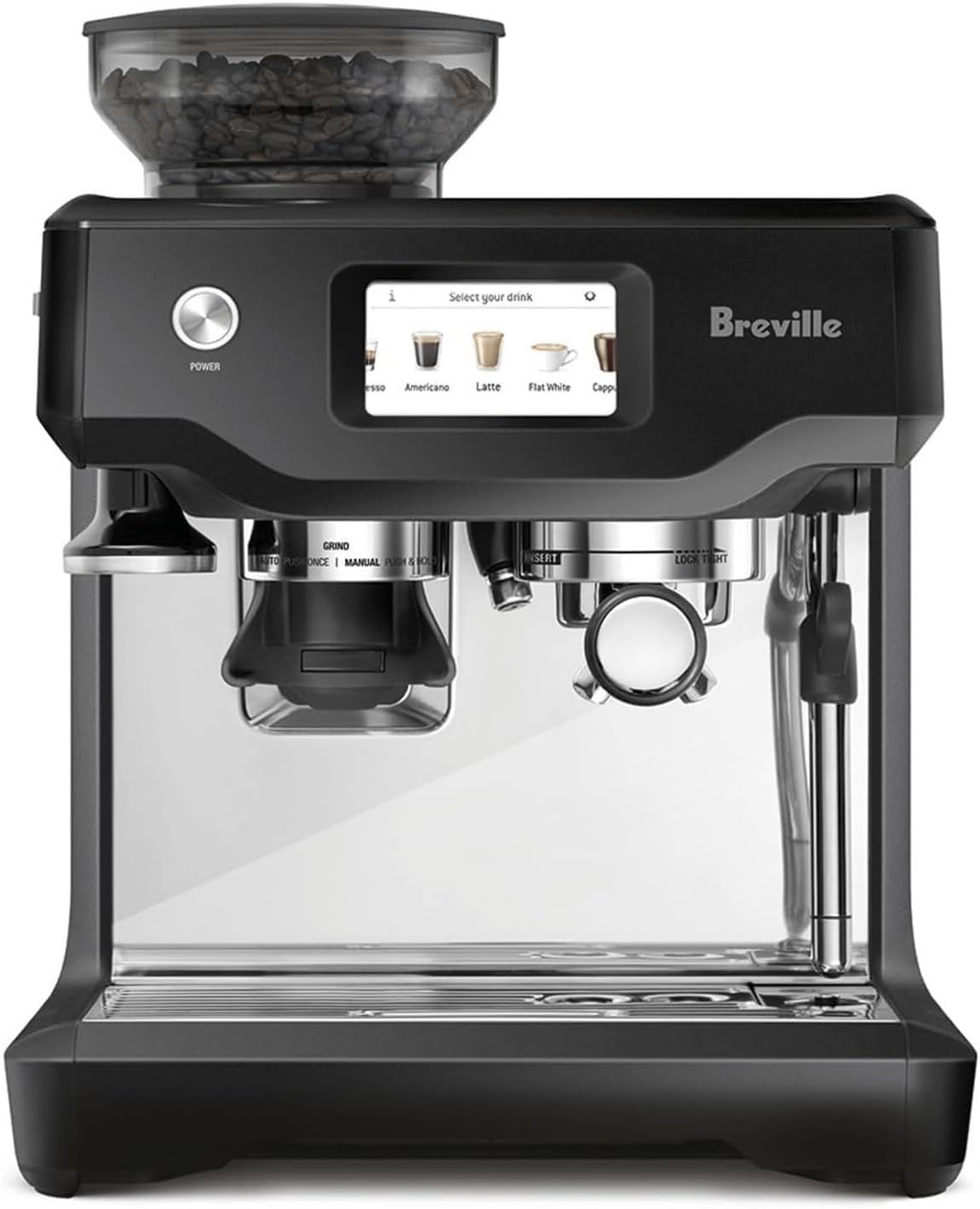
54mm diameter. The Barista Express, Barista Pro, Barista Touch, and Bambino Plus all share this size, so any 54mm single-wall basket from IMS, Normcore, Pesado, or Breville's Precision line will fit. Avoid 58mm baskets—those are for commercial machines.
Why does my shot choke after switching to a single-wall basket?
You're grinding too fine for the new basket, or your dose is too high. Single-wall baskets need finer grind than pressurized, but only by 2–4 settings—not all the way to flour. Drop your dose to 17g and coarsen by one notch at a time until water flows.
Do I need a new tamper after the conversion?
The stock 53.5mm plastic tamper still works, but a 54mm flat-base metal tamper gives a tighter seal against the basket wall and reduces side-channeling. It's a $20 upgrade that pays for itself in fewer ruined shots.
Can the built-in grinder on the BES870XL handle non-pressurized baskets?
Yes—up to a point. The internal conical burr can reach the fineness required, and most home baristas get great results from it for 12 to 18 months. Eventually you may notice inconsistency between shots; that's when an external grinder becomes worthwhile, not before.
Will I get crema with a single-wall basket?
Yes, and better crema than the pressurized basket produced—just different. Pressurized crema is thick, pale, and bubbly because it's whipped air. Single-wall crema is thinner, darker, and tiger-striped because it's actual emulsified oils. The second one tastes like espresso. The first one looks like espresso.
Is it worth converting, or should I just buy a better machine?
Convert first. A $20 basket plus a $20 tamper unlocks roughly 80% of what a $1,200 machine offers from the Barista Express. If after a month of practice you still want more, you'll have learned enough to spend the upgrade money intelligently. If you're not willing to practice, skip the conversion and look at a super-auto like the Philips 4400—buttons, not skill.
The Bottom Line
To convert Breville Barista Express to non-pressurized basket is the single highest-ROI change a BES870XL owner can make in 2026. It costs less than a bag of specialty beans, takes ninety seconds of physical work, and unlocks the espresso quality the machine was always engineered to deliver. The hard part isn't the swap—it's the week of dialing in afterward. Stick with it. By day eight, you'll be pulling shots your old pressurized basket simply could not produce, and the upgrade itch that sent you to this article will be gone.
Key Takeaways
- Choosing the right convert Breville Barista Express to non-pressurized basket means matching capacity and output ports to your actual devices
- Always check actual watt-hours (Wh), not just watts — runtime depends on Wh, not peak output
- Also covers: Barista Express single wall basket upgrade
- Also covers: IMS basket Breville Barista Express
- Also covers: Barista Express non pressurized 18g
- Compare price-per-Wh across models to find the best value for your budget