The Acaia Lunar for competition barista home practice shot timing is the gold-standard tool because it solves the three problems every aspiring competitor faces on a kitchen counter: drift between timer and scale, latency that smears your true brew ratio, and reps that fail to mirror stage workflow. With 20 ms response time, automatic flow-rate tracking through the Acaia app, and Bluetooth pairing to Acaia Brewmaster and Espresso AI, the Lunar lets you turn weekday espresso into measurable, reviewable training data. Below, the drills, machines, and configuration that turn a Lunar from a luxury scale into a coaching loop you can actually rely on heading into 2026 regional season.
Why the Lunar Is the Default Scale on the Comp Stage
Walk back-of-house at any 2026 World Barista Championship regional and you will see the same matte-black puck sitting under nearly every group head. The Acaia Lunar (second-generation, with the firmware refinements Acaia continues to push throughout 2026) has become the default for three reasons no competing scale matches simultaneously. First, the strain-gauge sampling rate of roughly 20 ms is fast enough that the first drop of espresso registers before it has a chance to splash off the cup wall. Second, the auto-tare, auto-start, and auto-stop modes let a competitor focus entirely on the puck and the group head instead of fiddling with a stopwatch. Third, the IPX5-rated chassis tolerates the inevitable steam-wand drip without throwing calibration. For a home barista chasing the same muscle memory the pros build on stage, training on identical hardware removes one variable from an already long list.
What "Shot Timing" Actually Means at Competition Level
Competition shot timing is not "press start when you flip the brew lever and stop when the cup hits target weight." Judges and modern app-based analytics look at four discrete intervals: pre-infusion duration, time-to-first-drop (TTFD), main-extraction duration, and total contact time. A Lunar paired with the Acaia Brewmaster app records every one of these automatically, then plots them on a flow curve you can review the next morning. That is the loop that turns hobbyist espresso into trainable data. A standard kitchen timer cannot give you TTFD with the resolution required to diagnose channeling, and a scale without flow-rate output cannot tell you whether a 36-gram yield in 28 seconds happened in a steady ramp or a late gusher. The Lunar gives you both, and that is the difference between guessing and adjusting.
Best Espresso Machines to Pair With the Lunar at Home
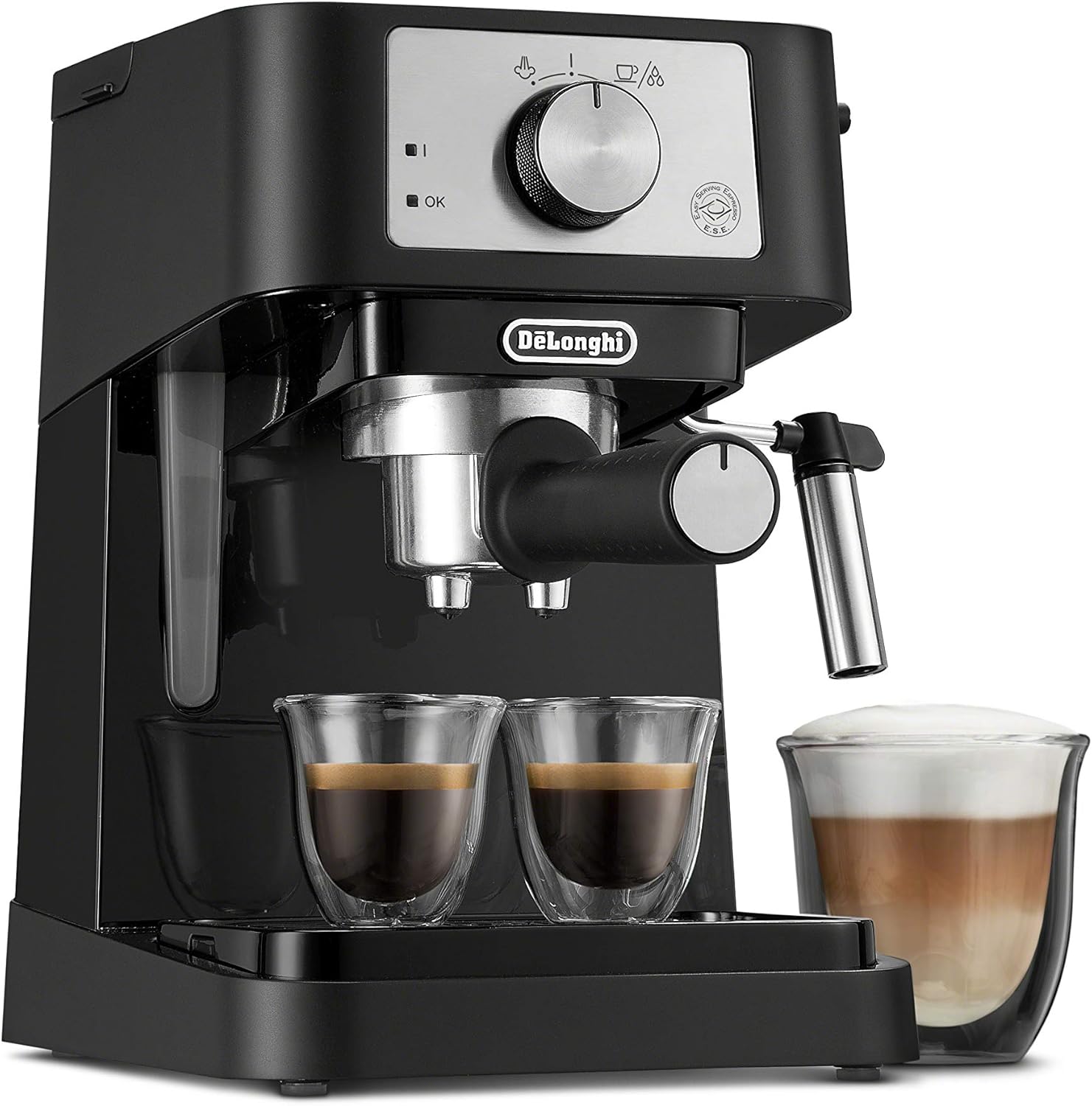
Routines are evaluated on consistency, and consistency at home starts with a machine that delivers the same pressure profile shot after shot. The Lunar reports the result honestly; the machine has to produce one worth measuring. Two home-grade machines stand out for competition prep in 2026.
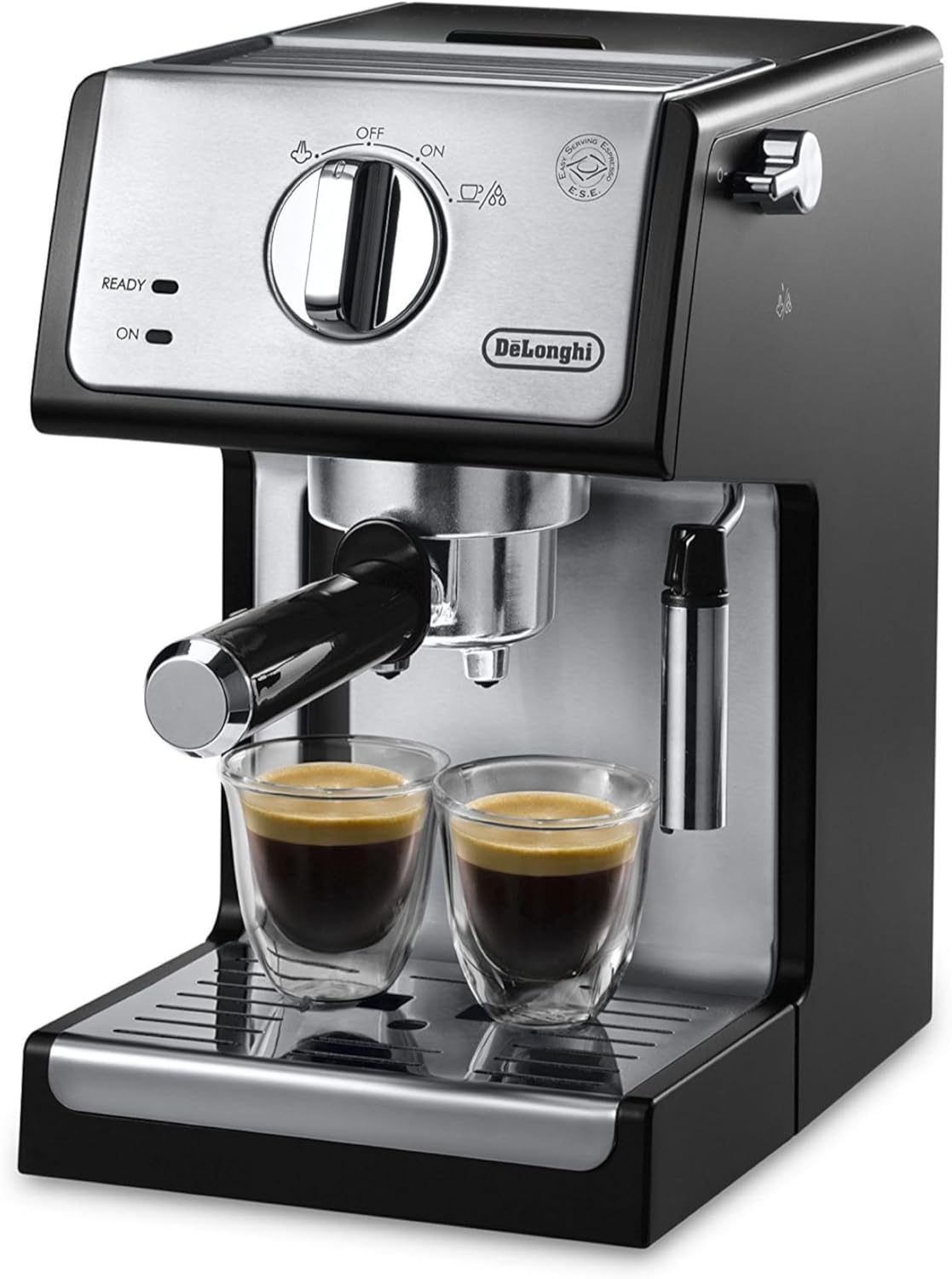
| Machine | Pre-infusion Type | Temperature Control | Lunar Clearance | Best Practice Use Case |
|---|---|---|---|---|
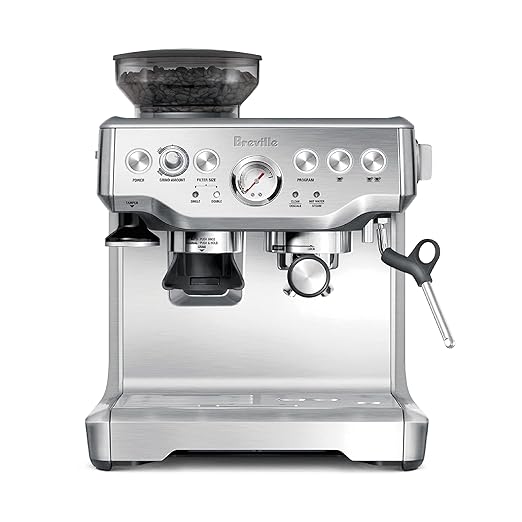
| Breville Barista Express BES870XL | Low-pressure ~7 second | Thermocoil with PID-style stability | Tray removable, ~95 mm with top off | Manual workflow drills, dialing-in reps |
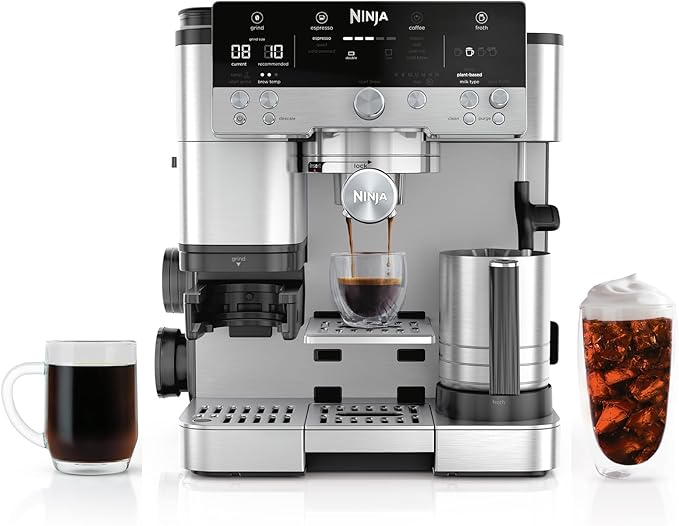
| Ninja Luxe Cafe Premier 3-in-1 | Adaptive automatic | Smart thermal sensor | Fits Lunar with stock cup | Repeatable baseline shots, milk-routine timing |
Breville Barista Express BES870XL — The Default Practice Machine
The Breville Barista Express has become the de facto practice machine for aspiring competitors in North America because it mirrors the manual workflow of a prosumer dual-boiler without the price tag. The 54 mm portafilter forces you to learn distribution and tamping discipline that scale up to a 58 mm comp machine, the manual steam wand demands actual technique rather than relying on automation, and the integrated grinder lets you isolate dose variability while you focus on shot pulling. Crucially for Lunar users, the drip tray top lifts off cleanly so the scale sits flush with the cup directly under the spouts — no awkward riser, no shifted center of gravity. Pair it with the Acaia Brewmaster app and you have a closed loop that captures dose, yield, time, and flow curve for every shot. Most competitors I know who started at home owned this machine before moving up to a Linea Mini or a Decent DE1.
Check the Breville Barista Express on Amazon
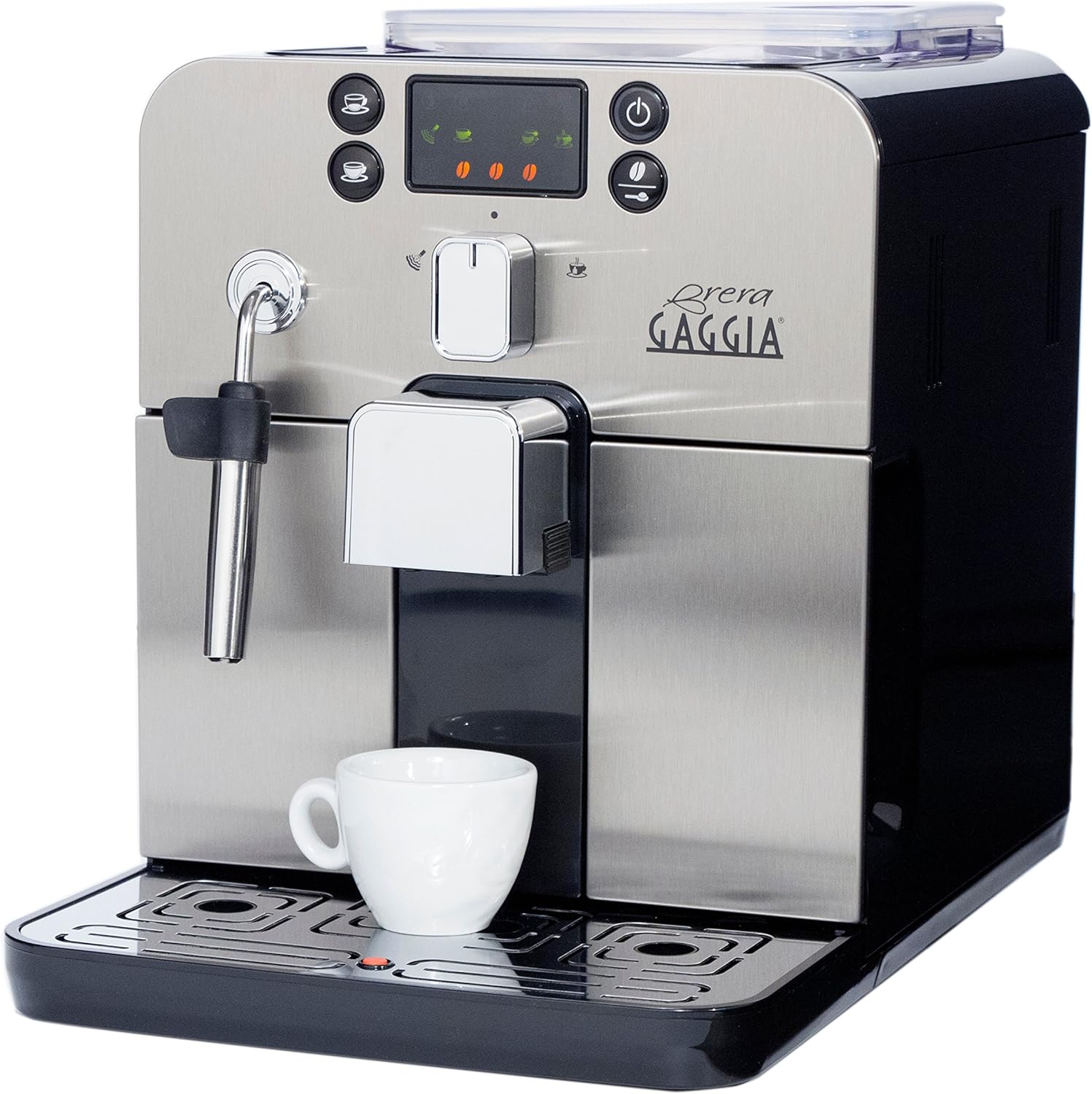
Ninja Luxe Cafe Premier 3-in-1 — Baseline Consistency on a Budget
The Ninja Luxe Cafe Premier is not a competition machine, but it is a surprisingly useful tool for one specific drill: building a repeatable baseline. Its adaptive pre-infusion and barista-assist mode produce shots with low variance even when puck prep is imperfect, which means you can isolate variables. Want to test whether a new grinder burr is actually improving extraction, or whether a different milk technique is changing latte texture? Run it through the Ninja so the machine is the constant. The drip tray accommodates the Lunar, and the built-in milk frother lets you practice the routine timing of an espresso-plus-milk course without juggling a separate steam wand. It will not teach you the manual skills the WBC scoresheet rewards, but it will give you a control surface for everything else you want to measure.
Check the Ninja Luxe Cafe Premier on Amazon
Setting Up Your Home Practice Station
A competition-grade home setup with the Acaia Lunar for competition barista home practice shot timing needs only four things beyond the machine and grinder: a stable Bluetooth host (an old iPad lives a great second life here), a knock box you can reach without breaking grip on the portafilter, a 6-cup mat that marks the same spots the comp tables use (espresso, milk, signature), and a ring light. The light matters: every serious practice session should be filmed so you can review prep, dose, distribution, tamp, and pour from the same angle the head judge would see. Mount the Lunar on a level surface that isolates the load cell from the espresso machine's pump vibration — a silicone mat works, but a thin square of cork is better. Pair the Lunar to Brewmaster or Espresso AI on launch, set auto-start to flow-trigger mode, and configure auto-stop to your target yield plus 1 gram of overshoot tolerance.
Five Drills Competition Baristas Actually Run at Home
Owning the gear is the easy part. The drills are what separate a hobbyist from someone who can pull a 36-gram shot in 27 seconds while delivering a sensory speech. These five are standard among 2026 regional finalists.
1. The Six-Shot Identical Set. Pull six consecutive shots aiming for the same yield (e.g., 36.0 g) in the same time (e.g., 28 s). Variance over the set is your signal. Anything beyond ±0.5 g or ±1 s and you have not earned the routine yet.
2. Blind Distribution. Dose without looking at the scale, then weigh. Repeat until you can hit ±0.1 g of target dose by feel alone. The Lunar's resolution makes this possible; a kitchen scale rounds the signal away.
3. TTFD Hunting. Time-to-first-drop is the single most diagnostic number for puck prep. Aim for 7–9 seconds with a typical comp blend at 9 bar; track how WDT, leveling, and tamp weight move the number.
4. Pour-Plus-Speech. Rehearse your spoken routine while pulling shots. Recording with both the Brewmaster log and a phone camera lets you correlate verbal stumbles to shot quality issues — a connection most home competitors miss until they get on stage.
5. Same-Bean Different-Grind Ladder. Pull three shots at three grind settings without changing dose. The Lunar's flow curve will visually show you the channeling threshold long before your palate does.
For more structured prep, see our guide to home barista competition prep and the deeper dive on espresso shot timing techniques pros use during stage rehearsal.
Calibration, Care, and the Lunar Quirks Worth Knowing
A Lunar that is not calibrated lies politely. Run the four-point calibration with a 100 g check weight every two to four weeks if you practice daily, and after any incident where the scale takes a knock or a serious steam-wand soaking. Charge via USB-C overnight before any long session — the battery is good for roughly 30 hours of active use, but firmware-driven Bluetooth handshakes drain it faster than the spec sheet suggests. Wipe the load cell area dry after every session; persistent moisture under the platform is the single biggest cause of drift complaints in the Acaia owner community. If the scale starts reporting nonsense weights mid-session, a quick power cycle plus a tare-on-flat-surface usually resolves it. Keep the platform free of grounds — even small particles between the platter and the chassis interfere with the strain gauge.
Pearl vs Lunar: Why the Lunar Wins for Espresso
The Acaia Pearl is the bench scale most home brewers know, but for espresso work the Lunar is the right tool. The Pearl's larger footprint does not fit under most group heads, its IPX rating is lower, and the response time, while excellent for pour-over, is not optimized for the sub-second resolution espresso work demands. The Lunar costs more, but if you are using a scale primarily on a drip tray with a portafilter overhead, you should buy the Lunar once instead of the Pearl twice. For a side-by-side, see our Acaia Pearl vs Lunar comparison.
Frequently Asked Questions
Is the Acaia Lunar worth it for a home barista who isn't actually entering competitions?
Yes, but with a caveat: the value is in the workflow it builds, not the scale itself. If you are pulling shots a few times a week and want to learn the same diagnostic instincts pros use, the Lunar pays back through cleaner data and faster skill progression. If you are content with rough ratios and a phone timer, a $40 scale will get you most of the way.
How does the Acaia Lunar for competition barista home practice shot timing compare to the Decent DE1 built-in scale?
The Decent DE1's integrated scale is excellent and pre-paired to the most detailed shot logger in consumer espresso. But the Lunar is portable. You can practice on the Breville at home, take the same scale to a friend's La Marzocco Linea Mini, and bring it to a regional jam session — all with one continuous shot history on your phone. For a competitor who will end up pulling on multiple machines, that portability matters more than the integration depth of a single platform.
What's the best grinder to pair with the Lunar for shot-timing drills?
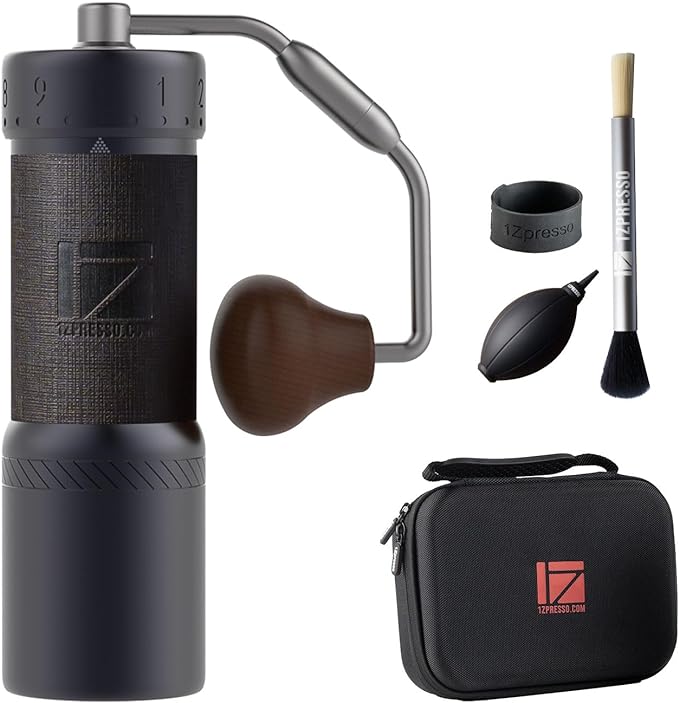
For sub-$1,000, the Eureka Mignon Specialita and the DF64 (flat burr) are the two grinders that show up most consistently in 2026 prep stations because both produce a fluffy, easy-to-distribute dose that lets the shot-timing variables come from the puck rather than from grinder retention. See our roundup of best coffee grinders for home baristas for current picks.
Can I use the Lunar wirelessly with multiple apps at once?
No — Bluetooth Low Energy bonds to a single host at a time. In practice, run Acaia Brewmaster as your primary logger and switch to Espresso AI or DiFluid Cafe when you specifically want their analytics. Disconnect cleanly before switching to avoid the pairing hiccups that 2026 firmware mostly, but not entirely, eliminates.
How accurate is the Lunar's auto-start function on a thermocoil machine like the Breville?
Auto-start fires on the first weight-change event above the configured threshold, typically in 50–70 ms after the first drop hits the cup. On the Breville Barista Express, that translates to a sub-100 ms variance from the true brew-lever activation — well inside the precision required for any home or competition-equivalent drill.
Will the Lunar fit under the group head of a Breville Barista Express with a standard demitasse on top?
Yes, with the drip tray top removed. Total stack height (Lunar plus demitasse) is approximately 75 mm, and the BES870XL group-to-tray clearance with the top off is roughly 95 mm. With the tray top on, only a shot glass will fit comfortably.
Is there a meaningful difference between the original Lunar and the refreshed 2024 model for competition use?
Yes. The refreshed Lunar uses USB-C, has a longer battery life, a more reliable Bluetooth radio, and improved firmware for the auto-start/auto-stop logic competitors rely on. If you are buying new for the Acaia Lunar for competition barista home practice shot timing use case, get the refreshed version; the price delta is justified by reliability improvements alone.
Key Takeaways
- Choosing the right Acaia Lunar for competition barista home practice shot timing means matching capacity and output ports to your actual devices
- Always check actual watt-hours (Wh), not just watts — runtime depends on Wh, not peak output
- Also covers: Acaia Lunar 2021 review competition
- Also covers: Lunar scale auto tare auto timer
- Also covers: Acaia Lunar for WBC practice setup
- Compare price-per-Wh across models to find the best value for your budget